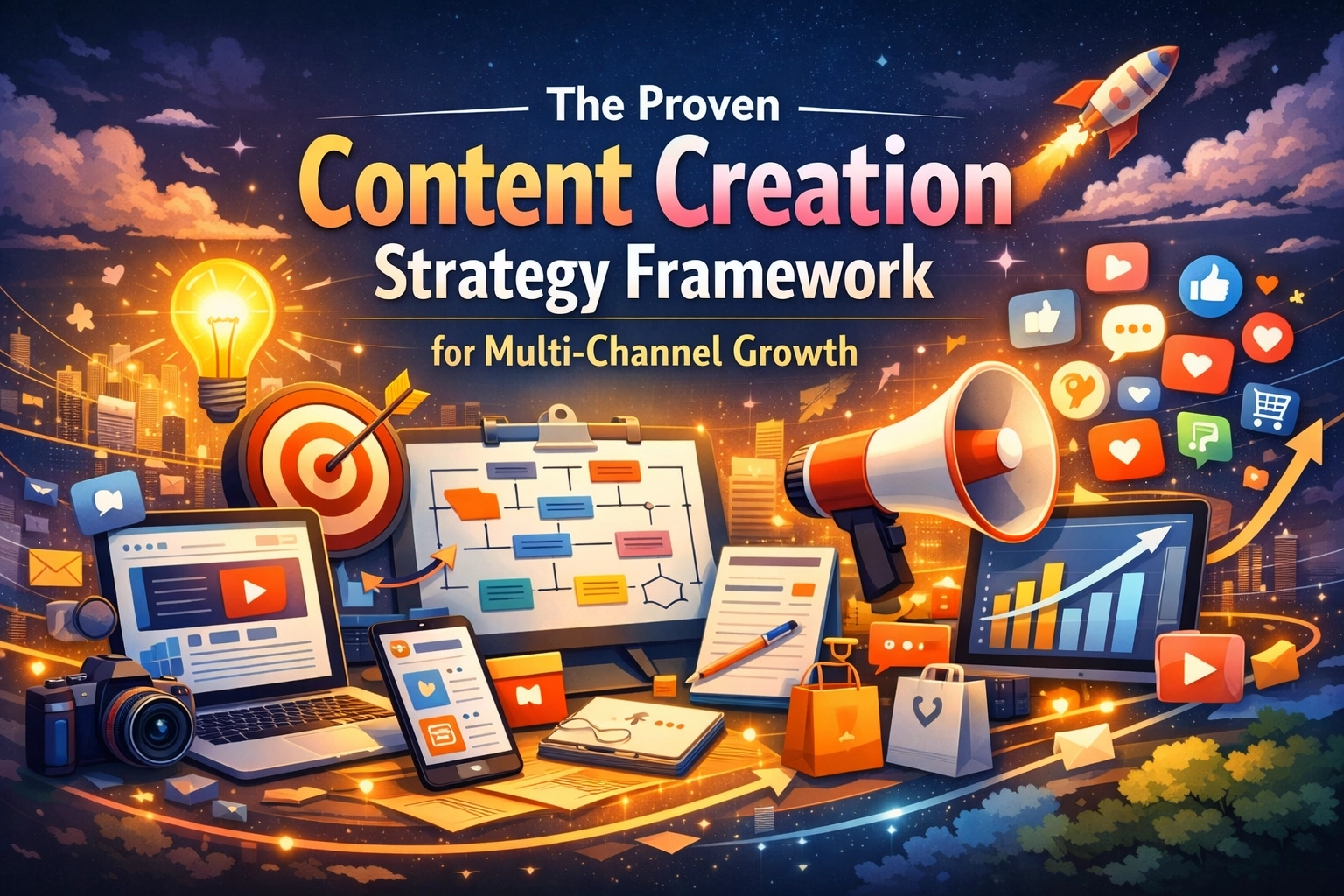
Scaling a digital presence in 2026 requires more than just "consistency." It requires a technical architecture that allows a single creator or a small team to dominate multiple platforms without burning out. Most creators fail because they treat YouTube, blogging, and social media as separate silos. To achieve multi-channel growth, you need a unified content creation strategy that treats every piece of content as a modular asset.
This framework is designed to bridge the gap between high-retention video content and high-intent search traffic. Whether you are learning how to start a blog or trying to decode YouTube algorithm secrets, this systematic approach ensures your efforts compound over time.
Phase 1: The Pillar-First Architecture
A content pillar is a broad topic or theme that your brand is an authority on. For "blog and youtube," our pillars might include Search Engine Optimization (SEO), Video Production, and Monetization.
When you define 3–5 core pillars, you stop guessing what to create. You begin building "Topical Authority." Google and YouTube both use sophisticated AI to determine if your channel or site is a reliable source of information. If you jump from "gardening" to "crypto" to "blogging tips," the algorithms cannot categorize you, and your reach will suffer.
How to Select Your Pillars
- High Search Volume: Use tools like Ahrefs or Semrush to find keywords with high demand but manageable competition.
- Monetization Potential: Can you integrate affiliate marketing for bloggers or sell a digital product within this topic?
- Longevity: Focus on "evergreen" content that stays relevant for years, rather than chasing weekly trends that vanish in 48 hours.

Phase 2: The "Video-to-Text" Content Loop
The most efficient content creation strategy for multi-channel growth starts with video. Why? Because it is easier to strip audio and text from a video than it is to turn a 2,000-word technical guide into a high-energy YouTube video.
Step 1: The YouTube Script
Start by writing a deep-dive script for a YouTube video. Focus on the first 30 seconds to maximize retention: one of the biggest YouTube algorithm secrets is that the "hook" determines your distribution. If viewers drop off early, the algorithm stops suggesting your video.
Step 2: The Blog Transformation
Once the video is filmed, do not simply paste a transcript onto your website. Transcripts are messy and bad for SEO. Instead:
- Use the script as an outline for a 1,500+ word blog post.
- Optimize for keywords like "blogging for beginners" or "vlogging tips for beginners."
- Insert the YouTube video at the top of the post to increase "dwell time," which signals to Google that your page is valuable.
Step 3: Social Micro-Content
Chop the video into 60-second vertical clips for TikTok and Reels. Extract 3–5 key insights for LinkedIn or X (formerly Twitter). One primary effort now fuels five different channels.
Phase 3: Technical SEO and the Best Blogging Platforms
A content strategy is only as good as its distribution. If you are blogging for beginners, choosing the right infrastructure is critical. While platforms like Medium or Substack are easy to start on, they don't offer the technical control needed for long-term growth.
For true multi-channel growth, a self-hosted WordPress site remains the gold standard. It allows you to:
- Control your SEO metadata.
- Implement schema markup (so your YouTube videos show up in Google search results).
- Own your audience data.
If you are just starting, focus on these technical elements immediately:
- Site Speed: Use a lightweight theme and a CDN (Content Delivery Network).
- Mobile Optimization: More than 60% of your traffic will come from mobile devices.
- Internal Linking: Link your new posts to older, high-performing articles to pass on "link equity."

Phase 4: Decoding YouTube Algorithm Secrets
YouTube is not a social media platform; it is a visual search engine. To grow, you must understand the two primary ways people find content: Browse and Search.
- Browse (Home Screen): This is driven by Click-Through Rate (CTR) and Average View Duration (AVD). Your thumbnail must create a "curiosity gap" that compels a click, and your content must deliver on that promise immediately.
- Search: This is where vlogging tips for beginners or technical tutorials thrive. Use descriptive titles, detailed descriptions, and "Chapters" to help the algorithm index your video for specific queries.
The "secret" to the algorithm in 2026 is User Satisfaction. YouTube tracks what viewers do after watching your video. If they leave the platform, your video is penalized. If they watch another one of your videos, the algorithm will promote you aggressively.
Phase 5: Mastering Workflow and Governance
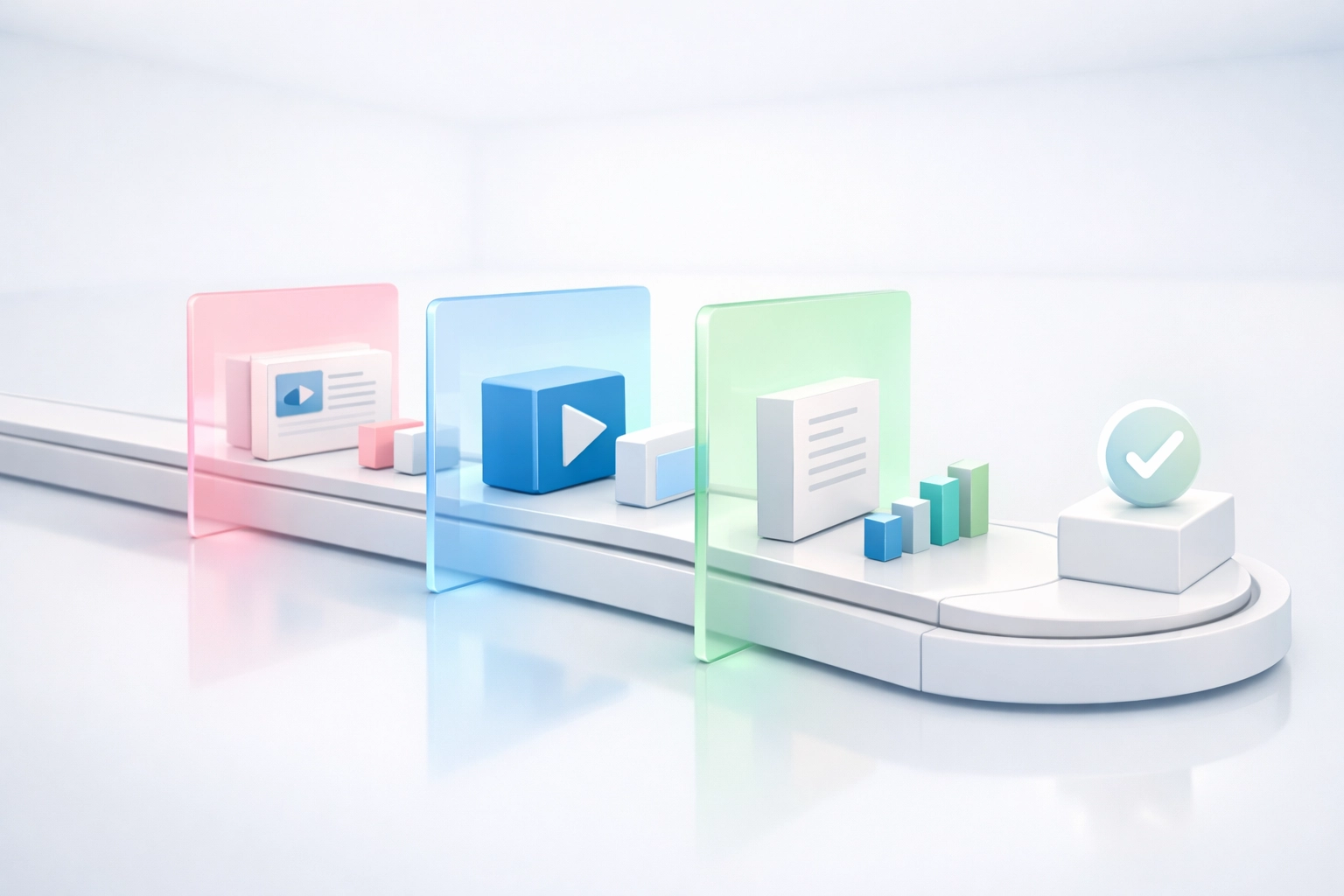
Consistent growth requires a documented workflow. If you treat every post like a new project, you will eventually burn out. You need a "Content Factory" mindset.
The 7-Step Workflow:
- Ideation: Brainstorming based on pillar gaps.
- Briefing: Defining the target keyword, intent, and primary CTA.
- Drafting/Filming: The actual creation of the asset.
- Editing: Professional polish for both text and video.
- QA Check: Verifying links, SEO tags, and mobile responsiveness.
- Distribution: Scheduling across all channels.
- Audit: Reviewing performance after 30 days.

Phase 6: Monetization Strategy for Multi-Channel Creators
You shouldn't wait until you have 100,000 subscribers to monetize your blog or channel. A sophisticated content creation strategy integrates monetization from day one.
Affiliate Marketing for Bloggers
Affiliate marketing is often the most lucrative path for technical content. Instead of generic ads, recommend tools you actually use. For example, if you're writing about the "best blogging platforms," include affiliate links to hosting providers or email marketing software. High-intent searchers are ready to buy; you just need to provide the right recommendation.
Diversifying Income
- AdSense/YouTube Partner Program: Great for passive income once you have volume.
- Sponsorships: Best for niche audiences with high trust.
- Digital Products: Courses, templates, or e-books that solve a specific problem mentioned in your content.
Phase 7: Data-Driven Iteration
The final stage of the framework is the feedback loop. Every month, you must perform a content audit.
- Which blog posts are ranking on Page 1? Double down on those topics.
- Which YouTube videos have the highest "returning viewer" rate? That is your core audience telling you what they want.
- Where is the drop-off? If people are leaving your blog after 10 seconds, your intro is too long or your page speed is too slow.
Use Google Analytics 4 (GA4) and YouTube Analytics together. Look for "Assisted Conversions": cases where someone watched a video, then visited the blog, then signed up for your newsletter. This is the hallmark of successful multi-channel growth.

Summary of the Framework
Building a content empire isn't about luck; it’s about the systems you put in place. By focusing on topical pillars, creating a "video-first" content loop, and prioritizing technical SEO, you position yourself to capture traffic from both Google and YouTube simultaneously.
Stop creating content in a vacuum. Start building a framework that grows while you sleep.
About the Author: Malibongwe Gcwabaza
CEO of blog and youtube
Malibongwe Gcwabaza is a digital strategist and the CEO of blog and youtube, a premier resource dedicated to helping creators master the art of multi-channel growth. With over a decade of experience in SEO, video marketing, and digital monetization, Malibongwe has helped hundreds of creators transition from hobbyists to professional entrepreneurs. His technical approach to content creation focuses on data-driven systems, scalable workflows, and sustainable monetization strategies. When he isn't analyzing algorithm shifts, Malibongwe is passionate about empowering the next generation of African digital creators to take their place on the global stage.
About the Author