If you’ve ever sat at your desk on a Monday morning, staring at the clock and wishing you were anywhere else, you aren't alone. Most of us are taught that we work for 40 years, retire at 65, and finally start "living." But what if I told you that you could flip the script?
Welcome to the FIRE Movement.
FIRE stands for Financial Independence, Retire Early. It’s a lifestyle movement that has taken the world by storm, especially among people who are tired of the traditional 9-to-5 grind. The goal is simple: save aggressively, invest wisely, and reach a point where your investments pay for your life, allowing you to quit your job decades earlier than your peers.
As the CEO here at blog and youtube, I’ve seen how transformative these financial strategies can be. In this guide, I’m going to break down exactly how the FIRE movement works, the math behind it, and how you can start your own journey toward freedom.
What is the FIRE Movement?
The FIRE movement isn't just about being "rich." It’s about freedom.
Financial Independence (FI) is the point where your passive income covers all your living expenses. Once you hit that number, work becomes optional. You can still work if you love what you do, but you no longer have to work to survive.
The "Retire Early" (RE) part is exactly what it sounds like. Instead of waiting until you're 65, FIRE practitioners aim to retire in their 30s, 40s, or 50s.
This movement traces its roots back to the 1992 book Your Money or Your Life by Vicki Robin and Joe Dominguez. They introduced the idea that we trade our "life energy" (our time) for money. By spending less and saving more, we reclaim our time.
The Simple Math Behind Early Retirement
Most people think retirement is based on age. It’s not. Retirement is based on a number.
The most important factor in how quickly you can retire is your savings rate. This is the percentage of your take-home pay that you keep after expenses.

If you save 10% of your income (the traditional advice), it will take you about 51 years to retire. If you can bump that up to 50%, you can retire in about 17 years. If you’re a "super saver" and hit a 70% savings rate, you could be done with work in less than 10 years.
Your "FIRE Number" (The Rule of 25)
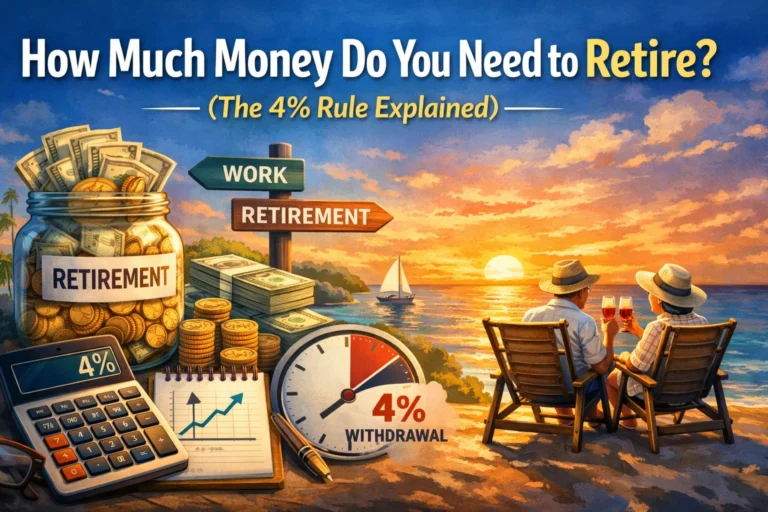
How much money do you actually need to retire? The FIRE community uses a simple shortcut called the Rule of 25.
To find your FIRE number, multiply your annual expenses by 25.
- If you spend $40,000 a year, you need $1 million.
- If you spend $60,000 a year, you need $1.5 million.
Once your investment portfolio hits that number, you are officially financially independent.
Understanding the 4% Rule
You might be wondering, "Why 25 times my expenses?" This comes from the 4% Rule, which originated from a famous piece of research called the Trinity Study.
The study found that if you withdraw 4% of your investment portfolio in the first year of retirement and adjust that amount for inflation every year after, your money has an extremely high probability of lasting at least 30 years.

For those looking to retire even earlier (say, in their 30s), some experts suggest being a bit more conservative and using a 3% or 3.5% withdrawal rate to make sure the money lasts for 50 or 60 years.
The Different Flavors of FIRE
One of the coolest things about the FIRE movement is that there isn’t just one way to do it. You can pick the path that fits your personality and goals.
1. LeanFIRE
This is for the minimalists. LeanFIRE followers live very frugally, often spending less than $40,000 a year. They focus on extreme savings and a simple lifestyle so they can quit the rat race as fast as possible.
2. FatFIRE
If you want to live a luxury lifestyle in retirement: traveling the world, eating at nice restaurants, and not worrying about a budget: this is for you. FatFIRE requires a much larger "number," usually a portfolio of $2.5 million or more.
3. BaristaFIRE
These folks have saved enough to cover their basic needs but still work a low-stress, part-time job (like being a barista) to cover "fun money" or to get health insurance. It’s a middle ground that lets you quit the corporate grind early.
4. CoastFIRE
CoastFIRE is when you have enough in your retirement accounts right now that, even if you never invested another penny, your money would grow to your FIRE number by the time you reach traditional retirement age. This allows you to stop stressing about saving and just work enough to cover your current bills.

How to Speed Up Your Journey to FIRE
Achieving FIRE requires two main levers: spending less and earning more.
Step 1: Slash Your Expenses
You don’t have to live on beans and rice, but you do need to be intentional. The "Big Three" expenses for most people are housing, transportation, and food. If you can optimize those, you’re 80% of the way there.
Step 2: Build Multiple Streams of Passive Income
You can't just save your way to wealth; you need your money to work for you. Building passive income is the "secret sauce" of the FIRE movement.
- Dividend Investing: This is a favorite for many in the FIRE community because it provides regular cash flow. Check out our guide on How to Start a Dividend Investing Portfolio for Passive Income to learn how to get started.
- Real Estate: Owning rental property can cover your mortgage and then some. We broke down the basics in Real Estate Investing: How to Earn Rental Income (The Easy Way).
- Digital Products: If you have a skill, you can create something once and sell it forever. Learn more in our post about Creating and Selling Digital Products for Recurring Revenue.
Step 3: Use Tech to Your Advantage
Every dollar counts. Using apps to track your spending or earn small bits of cash can add up over a decade. We’ve listed some of the Best Passive Income Apps to Earn Extra Cash Daily to help you find those extra margins.

Common Challenges and How to Handle Them
It’s not all sunshine and early sunsets. The FIRE path has its hurdles.
- Healthcare: In many countries, health insurance is tied to employment. Early retirees have to factor in the cost of private insurance, which can be expensive.
- Inflation: Prices go up over time. This is why the 4% rule includes an adjustment for inflation, but it's still something to watch closely.
- Market Crashes: If the stock market drops 20% right after you retire, it can be scary. This is why many FIRE followers keep 1–2 years of cash in a high-yield savings account to avoid selling stocks during a downturn.
If you’re just looking for general ideas to get the ball rolling, I highly recommend reading our list of 10 Passive Income Ideas to Make Money While You Sleep. It’s the perfect starting point for anyone new to this.
Is FIRE Right for You?
The FIRE movement isn’t about hating work: it’s about loving your life more than your paycheck.
Even if you don't want to retire at 35, adopting the principles of FIRE will make you more financially secure. Having a "gap year" fund, being debt-free, and having investments that pay you every month takes the stress out of life.
The journey to early retirement starts with a single step: calculating your number. Once you know what you’re aiming for, every dollar you save is a piece of your freedom bought back.
So, are you ready to start your FIRE? Let's get to work: so you don't have to!
About the Author