Let’s be real for a second: nobody actually enjoys looking at spreadsheets. In the past, managing your money meant sitting down once a week (or once a month if you were procrastinating) and trying to figure out where all your cash went. It was tedious, boring, and honestly, a little bit depressing.
But welcome to March 2026. Things have changed.
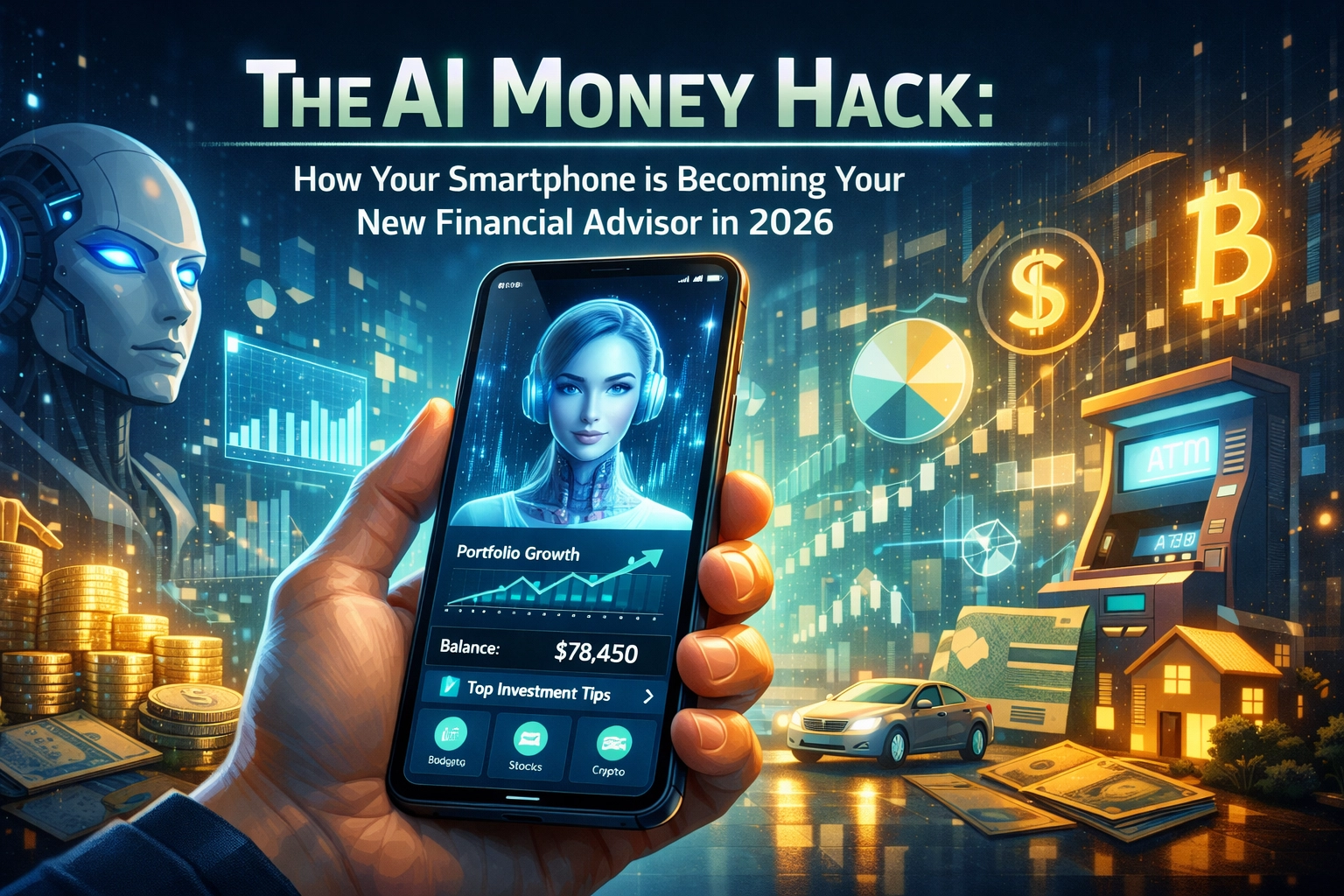
If you’ve been keeping an eye on personal finance trends 2026, you’ve probably noticed that the "old way" of doing things is officially dead. We’re no longer just using apps to track our spending; we’re using our smartphones as full-blown, 24/7 financial advisors. This isn't just about "budgeting" anymore; it's about using AI for personal finance to hack your way to wealth while you sleep.
Whether you're trying to figure out how to start a blog and manage your first few dollars of income, or you're a seasoned pro looking for youtube algorithm secrets to boost your views and revenue, the way you handle that money is being revolutionized by the device in your pocket.
The Death of the Dashboard: Just Talk to Your Money
Remember when you had to click through ten different menus just to see how much you spent on coffee last month? Those days are gone. One of the biggest shifts we’ve seen this year is the move toward conversational AI interfaces.
Instead of a static dashboard full of confusing charts, your financial app is now a chatbot that actually knows you. Apps like Cleo have paved the way, but in 2026, every major bank has integrated natural language processing. You can literally ask your phone, "Hey, can I afford those new sneakers if I still want to hit my savings goal by June?" and it will give you a straight answer based on your real-time data.

These AI advisors don't just give you numbers; they give you context. They explain financial concepts in plain English. If you’re a beginner exploring blogging for beginners, you might not understand "tax-loss harvesting" or "diversification." Your AI advisor will break it down for you like a friend over lunch, making institutional-grade advice accessible to everyone, not just the folks with six-figure net worths.
Proactive Intervention: The "Wait, Don't Buy That" Feature
This is where things get really cool, and maybe a little bit spooky. The defining innovation of 2026 is proactive guidance.
In the old days, you’d spend too much on a Saturday night and then feel the guilt on Monday morning when you checked your balance. Now, AI platforms like Whistl are stepping in before you make the mistake. Because these apps are connected to your accounts via secure tools like Plaid, they see your spending patterns in real-time.
Imagine you’re at the checkout counter. Your AI detects that this purchase is going to put you over your "discretionary" budget for the week. It sends a quick notification: "Hey Malibongwe, if you buy this now, you'll be $40 short for your car insurance payment next week. Want to skip it?"
It’s like having a tiny, non-judgmental financial coach sitting on your shoulder. For anyone working on a content creation strategy, where income can be a bit "feast or famine," this kind of real-time intervention is a literal lifesaver. It helps you stay grounded when that first big check from affiliate marketing for bloggers hits your account, ensuring you don't blow it all at once.
Automation: Making Your Cash Work Harder
We’ve talked about saving, but what about growing? In 2026, "lazy cash" is the ultimate sin. If your money is just sitting in a standard savings account, you’re losing out.
The latest AI tools are now using "agentic AI", basically, smart software that can take action on your behalf. These tools, like ElektraFi, monitor your cash flow constantly. When they see you have an extra $500 that isn't needed for bills in the next 30 days, they don't just let it sit there. They automatically move it into a high-yield CD, a diversified stock portfolio, or even a tax-efficient retirement account.

This is the ultimate "set and forget" strategy. For those of you looking to monetize your blog or scale your side hustle, this automation is key. You focus on the creative side: the vlogging tips for beginners and the content: while the AI handles the complex movement of money to maximize your interest and growth.
Security: The AI Shield Against Modern Fraud
With great tech comes great responsibility: and unfortunately, more sophisticated scammers. However, the AI in your phone is also your best defense.
In 2026, security isn't just about a strong password. AI tools are now using behavioral biometrics to protect your accounts. They know how you swipe, how fast you type, and where you usually spend your money. If a scammer gets hold of your details and tries to wire money to an offshore account at 3:00 AM, the AI recognizes that this doesn't fit your "pattern" and freezes the transaction instantly.
These tools also scan for "vampire subscriptions": those $9.99 charges you forgot about three years ago. By identifying and cancelling these automatically, the AI is essentially "finding" money for you that you didn't even know you were losing.
Why This Matters for Creators and Bloggers
If you are following this blog, you’re likely interested in the intersection of technology and business. Whether you’re searching for the best blogging platforms or trying to crack the youtube algorithm secrets, you are essentially a micro-entrepreneur.
Managing personal finance as a creator is notoriously difficult. One month you might make $5,000 from a viral video, and the next month you might make $500. Traditional banks hate this kind of volatility. But AI advisors love it. They are built to handle "lumpy" income. They can calculate exactly how much you should set aside for taxes from every single payout, ensuring you’re never caught off guard during tax season.

If you're just starting and learning how to start a blog, don't wait until you're "rich" to start using these tools. The earlier you implement an AI for personal finance strategy, the faster your small wins will compound into significant wealth.
The New Era of Wealth Building
We are living in an era where the barrier to entry for high-level financial planning has been completely destroyed. You don't need to pay an advisor 1% of your total wealth every year just to get a phone call once a quarter. You have a more powerful, more attentive, and more accurate advisor right in your pocket.
The personal finance trends 2026 are all about empowerment. It’s about taking the stress out of the "boring" stuff so you can focus on what you actually care about: whether that's building your brand, traveling, or just enjoying your life without worrying about your bank balance.

Final Thoughts: Should You Trust the AI?
A lot of people ask me, "Malibongwe, is it actually safe to let an AI manage my money?"
The truth is, humans are far more prone to error than algorithms when it comes to math and pattern recognition. As long as you are using reputable platforms that use end-to-end encryption and are backed by major financial institutions, you are likely safer than you were with manual entry and paper statements.
The "AI Money Hack" isn't about giving up control; it's about gaining clarity. It's about having the data you need to make better decisions. So, if you haven't explored the latest AI financial tools on your phone yet, today is the day. Your future self (and your bank account) will thank you.
Stay savvy, keep creating, and let the machines do the heavy lifting for once!
About the Author