Let’s be real: most people hate the word "budget." It usually sounds like a recipe for a boring life where you can’t buy coffee, can’t go out with friends, and have to track every single cent in a massive spreadsheet that eventually gets abandoned.
But what if I told you there’s a way to manage your money that doesn't feel like a chore? Enter the 50/30/20 rule. It’s the ultimate "beginner-friendly" framework for anyone who wants to get their finances in order without losing their mind.
Whether you’re just starting your first job in 2026 or you’ve been working for years and still wonder where your money goes every month, this guide is for you. Let’s break down exactly how this rule works and how you can use it to build wealth.
What is the 50/30/20 Rule?
The 50/30/20 rule is a simple percentage-based budgeting system. It was popularized by Senator Elizabeth Warren and her daughter, Amelia Warren Tyagi, in their book All Your Worth.
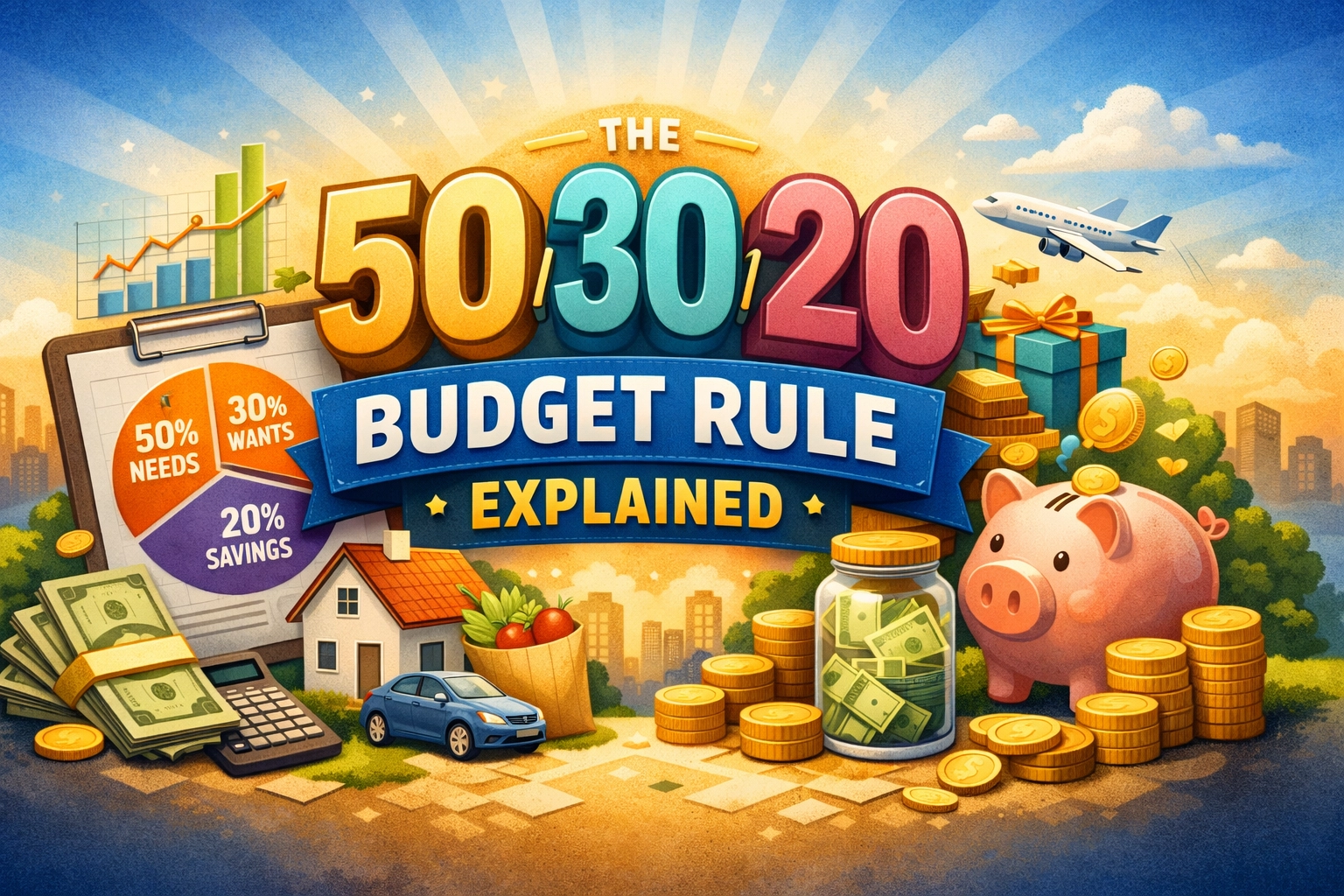
The idea is to divide your after-tax income into three clear categories:
- 50% for Needs
- 30% for Wants
- 20% for Savings and Debt Repayment
By using percentages instead of fixed dollar amounts, the rule scales with you. Whether you’re earning $2,000 a month or $10,000 a month, the logic stays the same. It forces you to prioritize the essentials while still giving you permission to enjoy your life.
Step 1: Calculate Your After-Tax Income
Before you can divide your money, you need to know exactly how much you’re working with. This is where many people trip up. You shouldn't base your budget on your "gross salary" (the big number on your contract). You need to use your take-home pay.
This is the amount that actually hits your bank account after taxes, health insurance, and retirement contributions (if they are deducted automatically by your employer) are taken out.
If you’re a freelancer or a business owner, this step is a bit trickier. You’ll need to estimate your monthly earnings and subtract what you owe in taxes and business expenses. Once you have that "net" number, you’re ready to start the math.

The 50%: Your "Needs"
The biggest slice of the pie: 50%: goes toward your "Needs." These are the non-negotiables. If you don't pay for these things, your life becomes very difficult very quickly.
Common "Needs" include:
- Housing: Rent or mortgage payments.
- Utilities: Electricity, water, and heating.
- Groceries: The basic food you need to survive (not fancy dinners out!).
- Transportation: Your car payment, gas, insurance, or public transport passes.
- Healthcare: Insurance premiums and essential medications.
- Minimum Debt Payments: The absolute minimum you have to pay on your credit cards or loans to avoid penalties.
The trick here is to be honest. Is that high-speed fiber internet a need? In 2026, if you work from home, it probably is. Is a $150-a-month gym membership a need? Probably not: that’s a want.
If your "Needs" take up more than 50% of your income, it’s a sign that you might be "house poor" or "car poor." You might need to look at ways to downsize or find cheaper alternatives to bring this number back into balance.
The 30%: Your "Wants"
This is the category that makes the 50/30/20 rule sustainable. Most budgets fail because they try to cut out "Wants" entirely. But let’s face it: life is meant to be lived.
The 30% category is for lifestyle choices: the things you spend money on that aren't strictly necessary but make life fun.
Common "Wants" include:
- Dining out: Coffee shops, restaurants, and takeout.
- Entertainment: Movies, concerts, and sporting events.
- Subscriptions: Netflix, Spotify, Disney+, and gaming passes.
- Hobby Gear: That new camera lens or those high-end running shoes.
- Travel: Weekend trips or saving for a big vacation.
- Shopping: New clothes that you like but don't strictly "need" for work.
The beauty of the 30% rule is that it provides a boundary. You can spend that money guilt-free as long as your Needs and Savings are covered. If you want a brand-new PlayStation 5, you can have it: you just might have to skip dining out for a few weeks to keep it within that 30% limit.

The 20%: Your "Savings and Debt"
This is the "Future You" fund. This 20% is what builds your wealth and protects you from financial disasters. While it’s the smallest category, it’s arguably the most important for long-term peace of mind.
This category covers:
- Emergency Fund: Building up 3 to 6 months of living expenses.
- Retirement: Contributions to your 401(k), IRA, or private pension.
- Extra Debt Repayment: Paying more than the minimum on high-interest credit cards or student loans.
- Investing: Putting money into the stock market, ETFs, or even crypto.
In the 50/30/20 rule, "Savings" is treated like a bill you owe to yourself. You pay it every month, no matter what. By consistently hitting that 20% mark, you ensure that you aren't just surviving month-to-month, but actually getting ahead.
Why the 50/30/20 Rule Works
Why is this specific framework so popular? It comes down to simplicity and psychology.
1. No Granular Tracking
You don't need to categorize every single head of broccoli you buy. You just need to know if you’ve stayed under your 50% limit for the month. It’s "big picture" budgeting.
2. It Addresses Debt
Most beginner budgets ignore debt. This rule integrates it. By categorizing minimum payments as "Needs" and extra payments as "Savings/Debt," you have a clear roadmap to becoming debt-free.
3. It Prevents Lifestyle Creep
As you earn more money, your 30% "Wants" budget grows, but so does your 20% "Savings." This ensures that as your income increases, your wealth increases alongside it, rather than just spending it all on a fancier car.

An Example in Action
Let's look at a practical example. Say you take home $3,500 (or R50,000) a month after taxes. Using the 50/30/20 rule, your monthly plan would look like this:
- $1,750 for Needs: This covers your rent, groceries, car insurance, and electricity.
- $1,050 for Wants: This is for your weekend beers, that new shirt you saw, and your Netflix subscription.
- $700 for Savings: This goes straight into your high-interest savings account or retirement fund.
If you find that your rent alone is $1,600, you immediately see the problem. You only have $150 left for groceries and all other needs. This clarity is what makes the rule so powerful: it highlights exactly where your financial pressure points are.
What if the Math Doesn't Work?
If you live in a high-cost city like New York, London, or Cape Town, you might find that your rent alone eats up 50% of your income. Does that mean the rule is broken?
Not at all. The 50/30/20 rule is a benchmark, not a law. If your needs are at 60%, you might need to temporarily drop your "Wants" to 20% and keep your "Savings" at 20%.
The goal is to move toward the 50/30/20 split. If you’re currently spending 80% on needs and 20% on wants with 0% in savings, your first goal is simply to find a way to save 5%. Then 10%.

How to Get Started Today
You don't need a fancy app to start (though they help). Here is a simple 3-step plan to start using the 50/30/20 rule today:
- Check your last 3 months of bank statements. Total up your average income and categorize your spending.
- Compare your current percentages to the rule. Are you spending 45% on "Wants"? Are you only saving 2%? Don't judge yourself: just get the data.
- Adjust for next month. Decide on one "Want" to cut or one "Need" to optimize (like switching to a cheaper phone plan) to bring your numbers closer to the 50/30/20 goal.
Final Thoughts
Budgeting doesn't have to be a restriction on your freedom. In fact, the 50/30/20 rule is designed to give you more freedom. When you know your essentials are covered and your future is being funded, you can enjoy that 30% of "fun money" without any of the typical "spender's guilt."
Start where you are, use the percentages as your guide, and watch how quickly your financial stress starts to fade. You’ve got this!
About the Author