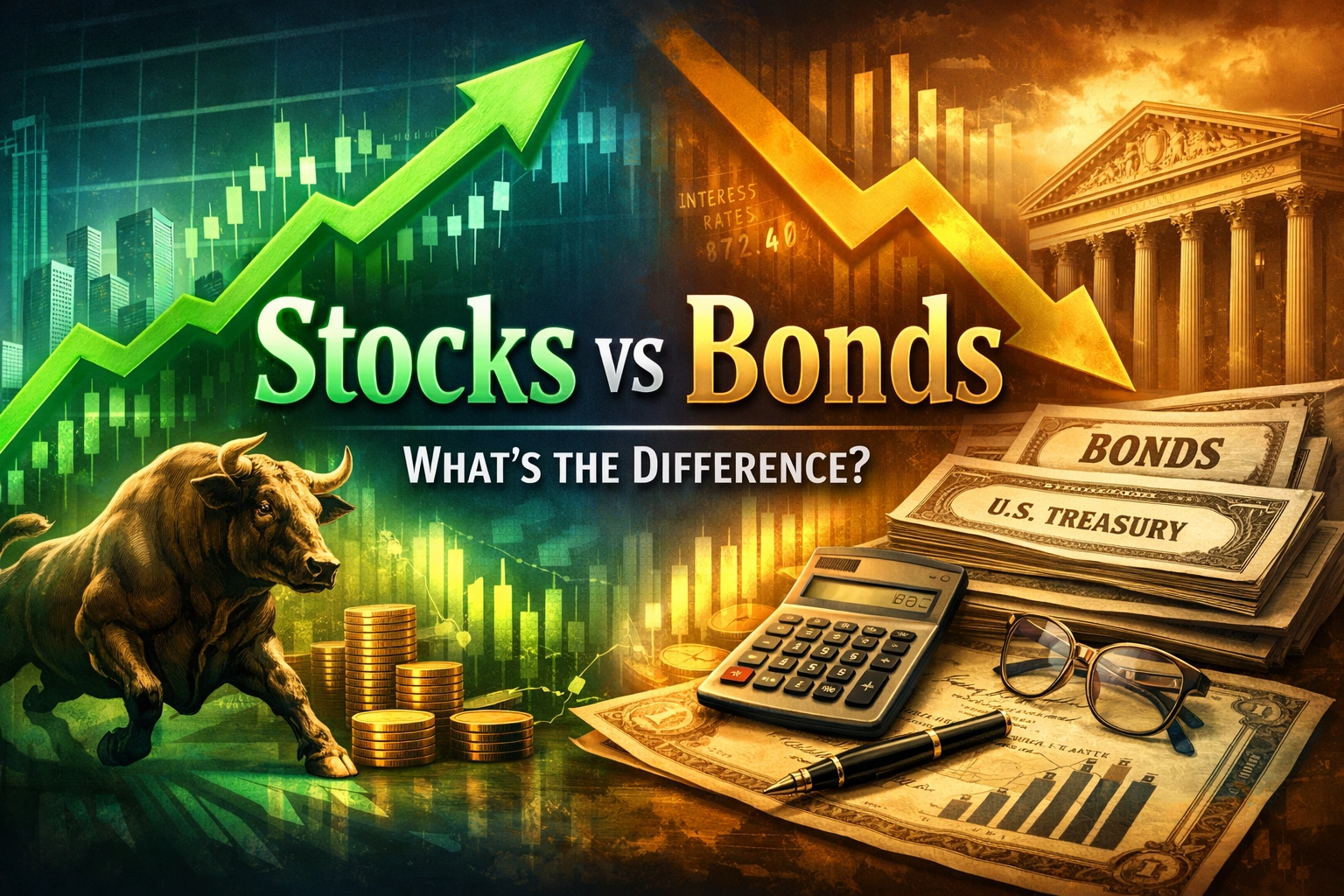
If you’ve ever sat down to look at your retirement account or opened a brokerage app for the first time, you were likely met with two main choices: stocks and bonds. They are the Batman and Robin of the investing world, they work together to help you build wealth, but they have very different personalities and superpowers.
Understanding the difference between these two is the foundation of becoming a successful investor. If you want to build a portfolio that can weather any economic storm while still growing over the long haul, you need to know exactly what you’re buying.
Let’s break it down in plain English.
The Core Difference: Ownership vs. Lending
At its most basic level, the difference between a stock and a bond comes down to your relationship with the entity you’re giving money to.
What is a Stock?
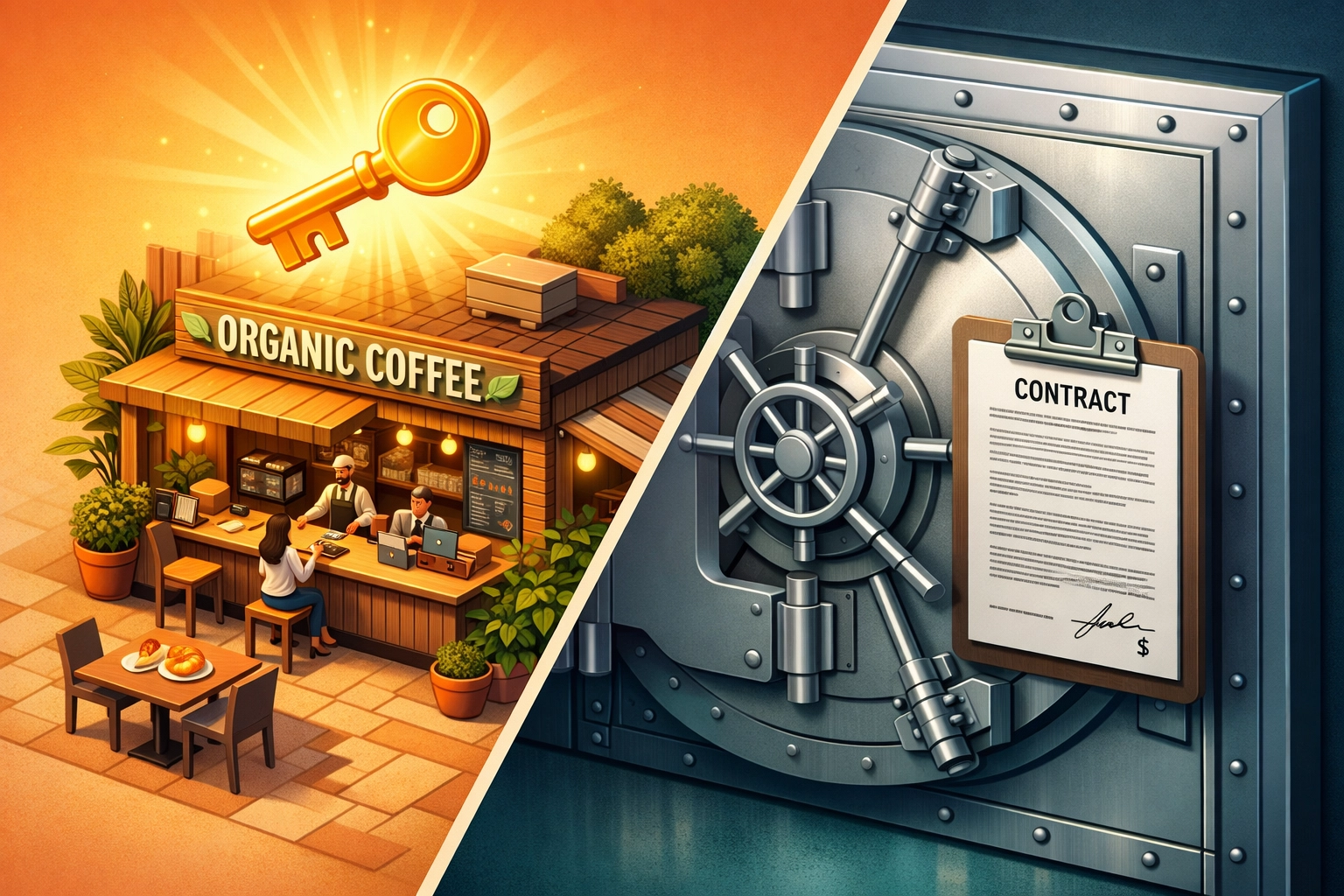
When you buy a stock, you are buying ownership. You become a "shareholder." Think of it like buying a tiny slice of a very large pizza. If the pizza shop does well and more people want a slice, the value of your slice goes up. You might even get a small share of the profits sent to you as a "dividend."
Because you own a piece of the company, your potential for profit is technically unlimited. If you bought $1,000 worth of Amazon in the 90s, that "slice" would be worth millions today. However, if the company goes bankrupt, you are the last person to get paid. You win big when the company wins, but you take the full hit when it loses.
What is a Bond?
When you buy a bond, you are lending money. You become a "creditor." Instead of being an owner, you are acting like the bank. You lend your money to a government or a corporation for a set period. In exchange, they promise to pay you back your original loan plus a fixed amount of interest along the way.
Bonds are generally seen as "safer" because the company is legally obligated to pay you back before they pay their shareholders. However, your upside is capped. You will never make more than the agreed-upon interest rate, no matter how successful the company becomes.
How They Generate Income
One of the biggest reasons to invest is to make your money work for you. Stocks and bonds do this in two very different ways.
Capital Appreciation and Dividends (Stocks)
With stocks, you mainly make money through capital appreciation. This is a fancy way of saying "buying low and selling high." You hope the company grows so that you can sell your shares for more than you paid for them.
Some stocks also pay dividends. These are regular payments made by the company to its shareholders out of its profits. Think of it as a "thank you" for being an owner. While dividends are great for passive income, companies can choose to stop paying them at any time if they hit a rough patch.
Interest Payments (Bonds)
Bonds are often called "fixed-income" investments. When you buy a bond, you know exactly what you’re getting. You receive coupon payments, which are interest payments made at regular intervals (usually twice a year).
At the end of the bond's term, known as the "maturity date", the issuer gives you back the full amount of your original loan (the principal). Unless the entity goes completely broke (defaults), your income from a bond is very predictable.
Risk and Return: The Great Trade-Off
In the world of finance, there is no such thing as a free lunch. If you want higher returns, you have to take on more risk.
The Stock Market Roller Coaster
Historically, the stock market has returned an average of about 10% per year over the long term. That’s incredible for wealth building, but it doesn't happen in a straight line. Stocks are volatile. In a single year, the market could drop 20% or 30%.
If you have a short timeline, say, you need the money for a house next year: stocks are risky because you might be forced to sell during a market crash. But if you have 20 years, those temporary dips don't matter as much as the long-term growth.
The Steady Bond Train
Bonds are much less volatile. They don't jump up and down in price nearly as much as stocks do. Historically, long-term government bonds have returned about 5% to 6% per year.
While you won't get rich overnight with bonds, they act as a "cushion" for your portfolio. When the stock market is crashing and everyone is panicking, bonds usually hold their value or even go up in price as investors look for safety.

The Inverse Relationship: Why They Move Differently
You might have heard that stocks and bonds have an "inverse relationship." This means that when one goes up, the other often goes down (or stays flat).
Why does this happen? It’s mostly about investor psychology and interest rates.
- The "Flight to Quality": When the economy looks scary and stock prices are falling, investors get nervous. They sell their "risky" stocks and put their money into "safe" bonds. This high demand for bonds can drive bond prices up while stocks are down.
- Interest Rates: When the central bank (like the Fed) raises interest rates, new bonds are issued with higher interest payments. This makes older bonds (with lower rates) less attractive, so their price drops. At the same time, higher interest rates make it more expensive for companies to borrow money, which can hurt stock prices.
This tug-of-war is actually a good thing for you as an investor. By holding both, you ensure that your entire portfolio doesn't go to zero at the same time.

Types of Stocks and Bonds to Know
Not all stocks and bonds are created equal. Depending on your goals, you might lean toward specific types.
Common Types of Stocks:
- Growth Stocks: These are companies that are growing fast (like tech startups). They usually don't pay dividends because they reinvest all their profits into growing the business.
- Value Stocks: These are established companies that are "on sale." They might be boring (like a utility company), but they are stable and often pay great dividends.
- Blue-Chip Stocks: These are the giants: companies like Apple, Coca-Cola, or Disney: that have a long history of reliability.
Common Types of Bonds:
- Government Bonds (Treasuries): These are considered the safest investments in the world because they are backed by the government’s ability to tax its citizens.
- Corporate Bonds: These are issued by companies. They pay higher interest than government bonds because there is a higher risk that a company could go out of business.
- Municipal Bonds ("Munis"): These are issued by cities or states to fund projects like bridges or schools. The best part? The interest is often tax-free.

Which One Should You Choose?
So, should you put all your money in stocks to get that 10% return, or stay safe with bonds? The answer is almost always: Both.
The mix of stocks and bonds you hold is called your asset allocation, and it depends on two main factors:
1. Your Time Horizon
How long until you need the money?
- If you are in your 20s or 30s: You have decades to wait out market crashes. You should likely have a portfolio heavily weighted toward stocks (80% to 90%) to maximize growth.
- If you are nearing retirement: You don't have time to wait for a 5-year market recovery. You should increase your bond holdings (40% to 60%) to protect the wealth you’ve already built.
2. Your Risk Tolerance
Be honest with yourself: how would you feel if you opened your app and saw your $10,000 had turned into $6,000 overnight?
- If that thought makes you want to vomit, you need more bonds.
- If you see that as a "buying opportunity" or a "flash sale," you can handle more stocks.

Summary Comparison Table
| Feature | Stocks | Bonds |
|---|---|---|
| Your Role | Owner | Lender |
| Income Type | Dividends & Price Growth | Interest Payments (Coupons) |
| Risk Level | High (Volatile) | Low to Moderate |
| Potential Return | High (Unlimited upside) | Lower (Fixed upside) |
| Priority | Last to be paid | First to be paid |
| Main Goal | Wealth Growth | Wealth Preservation / Income |
Final Thoughts: Building Wealth Over Time
Building wealth isn't about picking the "perfect" stock or timing the bond market. It’s about balance.
Think of stocks as the engine of your car: they provide the power to move you forward toward your financial goals. Think of bonds as the brakes and suspension: they keep the ride smooth and help you stop before you crash.
Most beginners start with a simple "Target Date Fund" or a "60/40 Portfolio" (60% stocks, 40% bonds) and adjust as they learn more. The most important thing isn't which one you choose today, but that you start investing as soon as possible.
Compound interest is the most powerful force in finance, but it only works if you give it time. Whether you’re buying a piece of a company or lending to the government, you’re taking a step toward financial freedom. Keep it simple, stay consistent, and watch your wealth grow.
About the Author