Let’s be honest: for a while there, sitting on a pile of cash felt pretty good. Between 2023 and 2025, interest rates were high enough that even a basic high-yield savings account felt like a winning strategy. You could park your money, do absolutely nothing, and watch a decent little percentage tick up every month.
But as we settle into March 2026, the game has changed. If you’ve been keeping a close eye on personal finance trends 2026, you know that the "easy mode" for cash is starting to expire. With the Federal Reserve signaling significant rate cuts: some experts expect a drop of 100 basis points over the next year: that "high" yield in your savings account is about to look a lot lower.
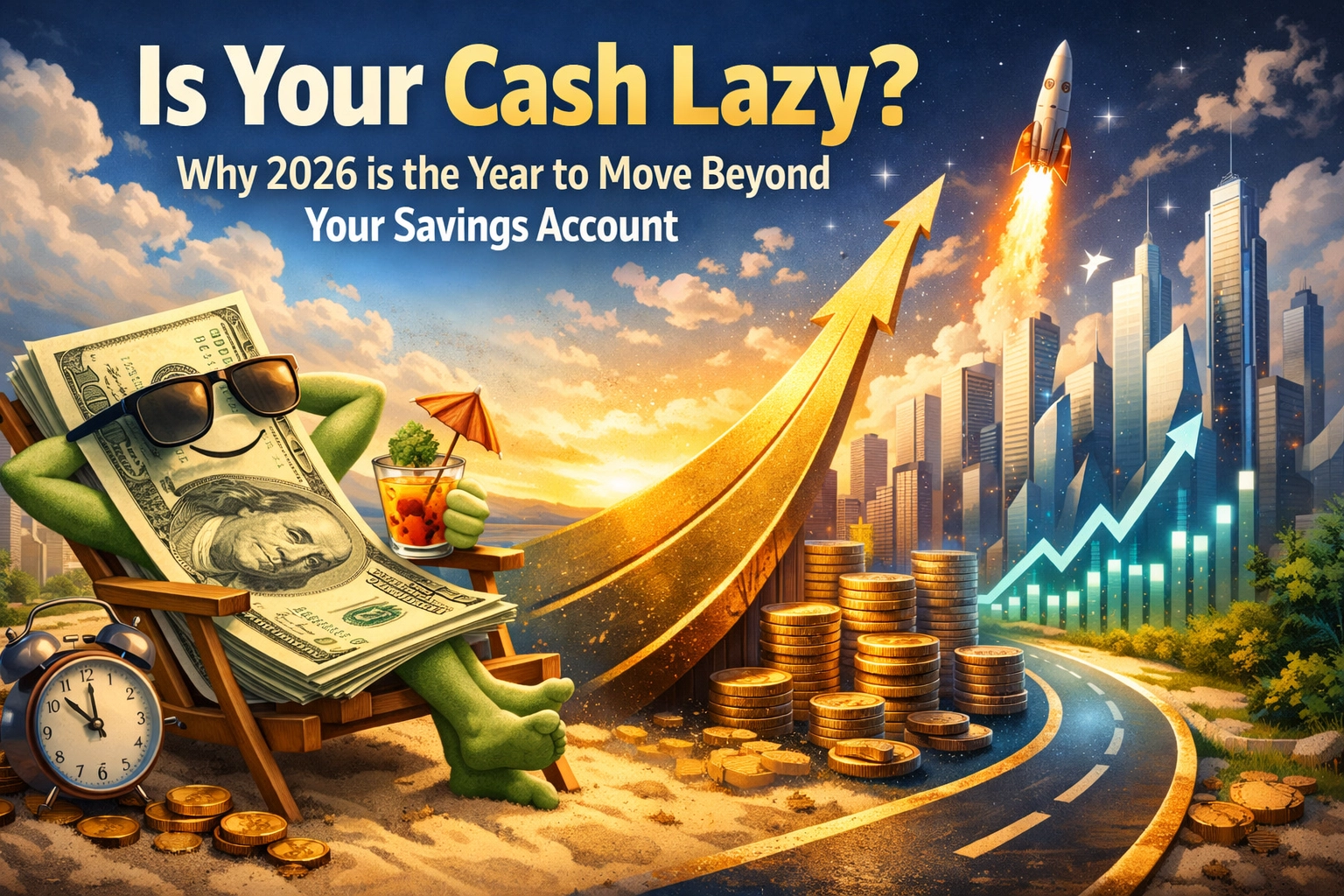
In short: your cash is getting lazy. And in 2026, lazy cash is expensive.

The 2026 Interest Rate Reality Check
We’ve had a good run with high yield savings accounts 2026, but the party is winding down. When interest rates drop, the return on your liquid cash is the first thing to take a hit. If you’re just letting your surplus funds sit in a standard account, you’re essentially watching your purchasing power slowly erode while missing out on the growth happening elsewhere in the market.
Research shows that over the long term, cash has significantly underperformed both stocks and bonds. While it’s tempting to stay "safe" in cash, the opportunity cost: what you’re giving up by not investing: is becoming too high to ignore. As the Fed prepares to cut rates, the urgency to put that excess liquidity to work has never been higher.
Why You Need a "Portfolio Mindset"
When we talk to people about how to grow their wealth, we often use the same logic we use for digital growth. Many of you come to us asking how to start a blog or looking for a content creation strategy. You understand that to make a blog successful, you can't just write one post and hope for the best; you need a strategy, diverse topics, and consistent effort.
The same applies to your money. If you treat your savings like a one-off project, it won't grow. You need to treat it like a portfolio. Just like blogging for beginners requires picking the right niche, successful investing in 2026 requires picking the right assets to replace your cooling savings account.
Moving Beyond the Basics: Where to Put Your Money
If you have more cash than you need for your 6-month emergency fund, it’s time to look at these 2026-friendly alternatives:
1. Medium-Duration Quality Bonds
Bonds are back in style for 2026. Specifically, medium-duration quality bonds (think the 4-to-7-year range) are expected to be the "sweet spot." These are projected to deliver mid-single-digit returns. Why is this better than a savings account? Because you get a combination of the yield (the interest) and capital appreciation (the value of the bond going up as interest rates fall). Plus, they provide a nice safety net if the stock market gets bumpy.
2. Certificates of Deposit (CDs)
If you like the "guaranteed" feeling of a savings account but want a higher rate, CDs are your best friend right now. By locking in a rate today, you protect yourself from the rate cuts coming later this year. It’s a way to tell the bank, "I’m giving you this money for 12 or 18 months, and you’re going to pay me yesterday’s high rates, not tomorrow’s low ones."
3. Equity Income Strategies
For those who can handle a little more movement, equity income strategies, basically investing in stocks that pay solid dividends: are a great way to boost your portfolio's "paycheck." Markets in places like Switzerland and Southeast Asia are looking particularly strong for this in 2026.

The Content Creation Parallel: Diversifying Your Income
It might seem weird to jump from bonds to vlogging tips for beginners, but stick with me. In the world of digital media, we tell creators all the time: "Don't rely on one platform." If you only use YouTube, you’re at the mercy of the youtube algorithm secrets. If you only have a blog, you’re at the mercy of Google.
To truly succeed, you need to monetize your blog through multiple streams: maybe it’s affiliate marketing for bloggers, selling digital products, or brand deals.
Your personal finances should work the same way.
- Your Savings Account is your "base."
- Your Bonds are your "steady income."
- Your Stocks/Growth Assets are your "viral hits."
If you only have the base, you’ll never reach the scale you want. If you’re looking for the best blogging platforms, you’re looking for a foundation to build on. Think of your 2026 financial plan as that foundation.
How to Move Your Money Without the Stress
One of the biggest mistakes people make when moving "lazy cash" is trying to time the market perfectly. They wait for the "perfect" day to buy a bond or the "perfect" dip in the stock market.
In 2026, the pros are using a strategy called systematic portfolio phasing.
Instead of moving $50,000 from savings to an investment account all at once, you move $5,000 a month for ten months. This averages out your costs and takes the emotional stress out of the process. If the market dips, you bought some assets on sale. If the market rises, you’re glad you started when you did.

Maintaining Your Safety Net
Before you go and move every cent into a medium-duration bond fund, remember the golden rule of 2026 personal finance: Liquidity still matters.
You should always keep enough cash for:
- Operating Expenses: One to five years of your regular bills (depending on how stable your job is).
- The Psychological Safety Net: An amount of cash that lets you sleep at night without checking the stock market.
Anything above that? That’s your "Lazy Cash." That’s the money that needs to get a job.
The New Rules of the Game
As we move further into 2026, the "wait and see" approach is becoming a "wait and lose" approach. Just as you wouldn't start a business without a solid plan, you shouldn't manage your wealth without looking at the horizon.
Whether you are focusing on your career, learning youtube algorithm secrets to grow a side hustle, or trying to understand affiliate marketing for bloggers to create passive income, your primary focus should always be making sure your existing assets are working as hard as you are.
The era of high-interest "do nothing" savings is fading. The era of the active, diversified portfolio is here.

Summary Checklist for 2026:
- Audit your accounts: How much is sitting in a 0.01% or even a 4% account that is about to drop?
- Define your "Lazy" amount: What is surplus beyond your emergency fund?
- Look at Bonds: Explore 4-7 year quality bonds for a mix of safety and growth.
- Lock in CDs: If you don't need the cash for a year, lock in current rates now.
- Phase it in: Don't rush. Use systematic phasing to move your money over several months.
Making your cash "work" doesn't have to be a full-time job. It just takes a little bit of movement and a willingness to step outside the comfort zone of a traditional savings account. Your future self: the one living in 2030( will definitely thank you for making the move today.)
About the Author