If you’ve ever felt like the world of investing was reserved for people in expensive suits on Wall Street, you aren't alone. For a long time, there was a massive barrier to entry. You needed a stockbroker, a lot of upfront cash, and a high tolerance for confusing jargon.
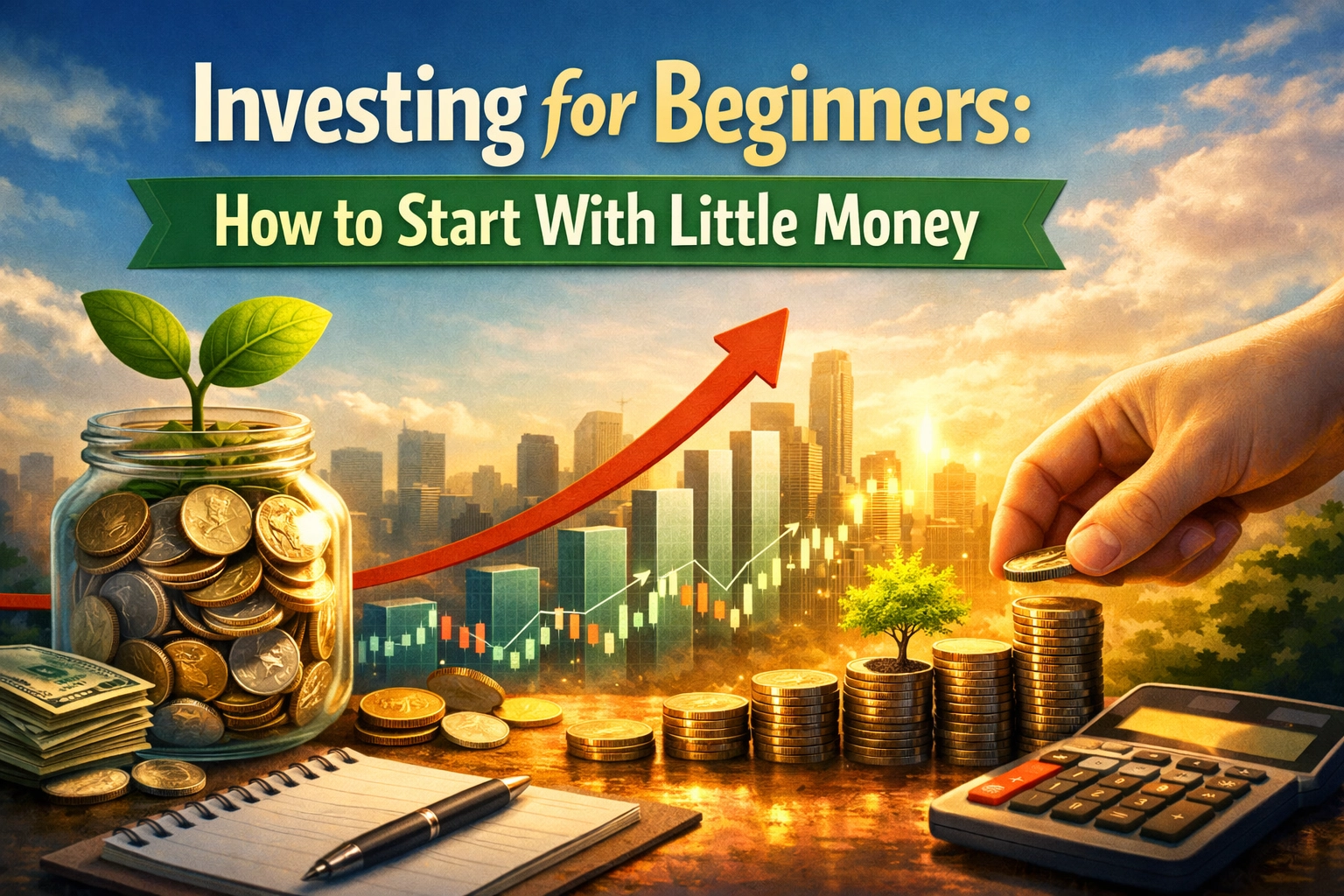
But things have changed. Today, the doors are wide open. You don’t need a million dollars to start building wealth: you can literally start with the spare change under your couch cushions or that $50 you were going to spend on a takeout dinner.
At "blog and youtube," we believe that financial freedom should be accessible to everyone. In this guide, I’m going to break down exactly how you can start investing with little money, avoid the common pitfalls, and set yourself up for long-term wealth.
The Biggest Myth: "I Need to Be Rich to Start"
The most common reason people give for not investing is, "I don't have enough money."
Here is the truth: Time is actually more valuable than the amount you start with. Because of something called compound interest (which we’ll talk about more in a bit), a 20-year-old investing $50 a month will often end up with more money than a 40-year-old investing $500 a month.
Investing isn't about hitting a home run on a single stock; it’s about getting your money into the game as early as possible. Even if you only have $10 or $100, getting started today is better than waiting until you have $10,000.
Step 1: Build Your Financial Foundation
Before you put a single cent into the stock market, you need to make sure your "house" is in order. Investing involves risk, and the last thing you want to do is sell your investments at a loss because you couldn't pay your electric bill.
Establish an Emergency Fund
An emergency fund is your safety net. Most experts recommend saving three to six months of "survival expenses."
Think about your monthly essentials:
- Rent or mortgage
- Groceries
- Utilities and Insurance
- Minimum debt payments
If your essentials cost you $2,500 a month, your target emergency fund should be at least $7,500. This money should sit in a high-yield savings account where it is safe and easy to access. Having this cash set aside prevents "panic selling" when the market hits a rough patch.
Handle High-Interest Debt
If you have credit card debt with a 20% interest rate, paying that off is essentially a "guaranteed" 20% return on your money. No investment in the stock market can consistently beat that. Clear out high-interest debt first, then shift that monthly payment toward your investments.

Step 2: Choose Your Account Type
Once your foundation is solid, you need a "bucket" to hold your investments. This is called a brokerage account. There are two main types you should consider as a beginner:
1. Retirement Accounts (401k or IRA)
If your employer offers a 401(k) match, take it! That is literally free money. Beyond that, a Roth IRA is a fantastic choice for beginners. You pay taxes on the money you put in now, but when you withdraw it in retirement, all the growth and earnings are tax-free.
2. Standard Brokerage Accounts
If you want to be able to access your money before retirement, a standard brokerage account is the way to go. There are no special tax perks, but there are also no restrictions on when you can take your money out. Apps like Robinhood, Fidelity, or Charles Schwab allow you to open these accounts with $0 and buy "fractional shares" (which means you can buy $5 worth of an expensive stock like Amazon).
Step 3: What to Buy? (Keep it Simple)
This is where most beginners get overwhelmed. Do you buy Apple? Tesla? Crypto? Gold?
For most people, the answer is Index Funds and ETFs (Exchange-Traded Funds).
Think of an individual stock like a single egg. If you drop it, it breaks. An ETF or Index Fund is like a giant carton containing hundreds of different eggs. If one or two break, the rest of the carton is still fine. This is called diversification.
Why ETFs are Perfect for Beginners:
- Low Cost: They are much cheaper than hiring a human fund manager.
- Diversified: You own a little piece of many different companies at once.
- Low Maintenance: You don't have to spend hours reading balance sheets.
Here are some specific, low-cost examples often recommended for beginners:
- SPDR Portfolio S&P 500 ETF (SPLG): This tracks the 500 largest companies in the U.S. It has a tiny expense ratio of 0.02%, meaning it costs you almost nothing to own.
- Vanguard Growth ETF (VUG): Focuses on companies that are expected to grow faster than the average market.
- Schwab U.S. Dividend Equity ETF (SCHD): Great if you want to earn "passive income" through dividends.

Step 4: The Strategy : Set It and Forget It
You don't need to watch the news every day to be a successful investor. In fact, the more you tinker with your portfolio, the worse you usually do.
Understand Your Risk Tolerance
How would you feel if your $1,000 investment dropped to $800 in one week? If that makes you want to vomit, you have a low risk tolerance and might want to include more bonds. If you see that as a "sale" and want to buy more, you have a high risk tolerance.
The Power of Automation
The secret weapon of the wealthy is Dollar Cost Averaging. This just means you invest the same amount of money at regular intervals (like every payday), regardless of whether the market is up or down.
By automating a $50 transfer every two weeks, you:
- Remove the emotion from investing.
- Buy more shares when prices are low.
- Buy fewer shares when prices are high.
- Build a consistent habit.
Step 5: Micro-Investing and Fractional Shares
If you truly only have a few dollars, look into "Micro-investing."
Apps like Acorns can round up your daily purchases to the nearest dollar and invest the change. If you buy a coffee for $3.50, the app rounds it to $4.00 and puts that $0.50 into a diversified portfolio. It sounds small, but over months and years, those nickels and dimes turn into real wealth.
Additionally, most major brokers now offer fractional shares. If one share of a major tech company costs $400 and you only have $10, you can buy 2.5% of that share. This allows you to build a high-quality portfolio even on a shoestring budget.

Common Pitfalls to Avoid
As you start your journey, keep these three things in mind:
- Don't Chase Hype: If everyone on social media is talking about a "moon shot" coin or a "guaranteed" penny stock, stay away. Successful investing is usually boring.
- Avoid High Fees: Even a 1% fee can eat up hundreds of thousands of dollars of your wealth over 30 years. Stick to low-cost ETFs.
- Don't Time the Market: Nobody knows what the market will do tomorrow. "Time in the market beats timing the market" every single time.
Summary: Your Getting Started Checklist
To wrap things up, here is your simple action plan:
- Check your cash: Ensure you have at least $100–$500 in an emergency fund.
- Open an account: Choose a Roth IRA or a standard brokerage account.
- Pick an ETF: Look for something broad like an S&P 500 index fund (like SPLG).
- Automate: Set up a recurring transfer, even if it's just $20.
- Be Patient: Let compound interest do the heavy lifting.
Investing isn't a get-rich-quick scheme. It’s a get-rich-slowly-but-surely plan. By starting small today, you are giving your future self the greatest gift possible: financial security.
You’ve got this! If you have questions about which platform to use or how to set up your first trade, leave a comment below or check out our other guides on "blog and youtube." Let’s build that wealth together.
About the Author