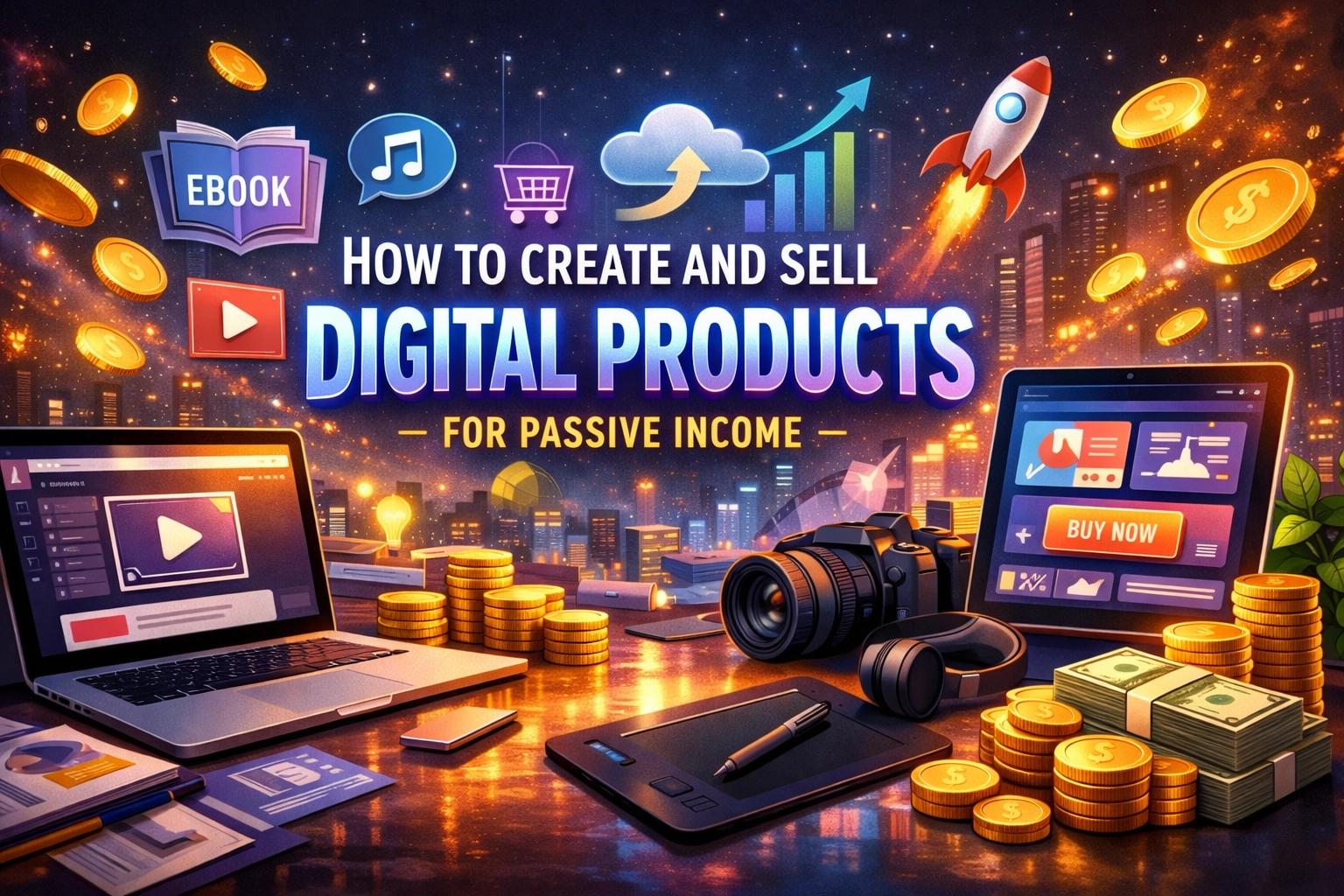
If you’ve been following our series on building wealth, you know we’re obsessed with one thing: making your money work for you so you don’t have to work for it forever. We recently talked about 10 Passive Income Ideas to Make Money While You Sleep, and today we are diving deep into one of the absolute best ways to do exactly that.
Creating and selling digital products is the ultimate "holy grail" of passive income. Why? Because you build the product once, and you can sell it ten, a thousand, or even a million times without ever having to restock inventory or worry about shipping.
In this guide, I’m going to walk you through how to start your own digital product business from scratch. No tech-genius skills required.
Why Digital Products are the King of Passive Income
Before we get into the "how," let's talk about the "why." If you compare selling a physical book to an eBook, the differences are massive. With a physical book, you have to print it, store it, pack it, and ship it. Every time you sell one, you have to make sure you have another one ready.
With digital products, your "inventory" is just a file on a computer.
The main benefits include:
- Low Overhead: You don't need a warehouse or a storefront. Most of the tools you need to start are free or very cheap.
- Infinite Scalability: Selling to 100 people is exactly the same amount of work as selling to one person.
- High Profit Margins: Since there are no manufacturing or shipping costs, almost every dollar you make goes straight into your pocket.
- Automation: You can set up a system where the customer pays and receives the file automatically while you’re out at lunch or fast asleep.

Step 1: Finding Your Winning Idea (Validate First!)
The biggest mistake beginners make is spending three months creating a massive 200-page course or eBook without checking if anyone actually wants to buy it.
You need to validate your idea first. Look for "pain points." What are people struggling with? What questions do people keep asking in Facebook groups, Reddit forums, or YouTube comments?
Some high-demand digital product categories include:
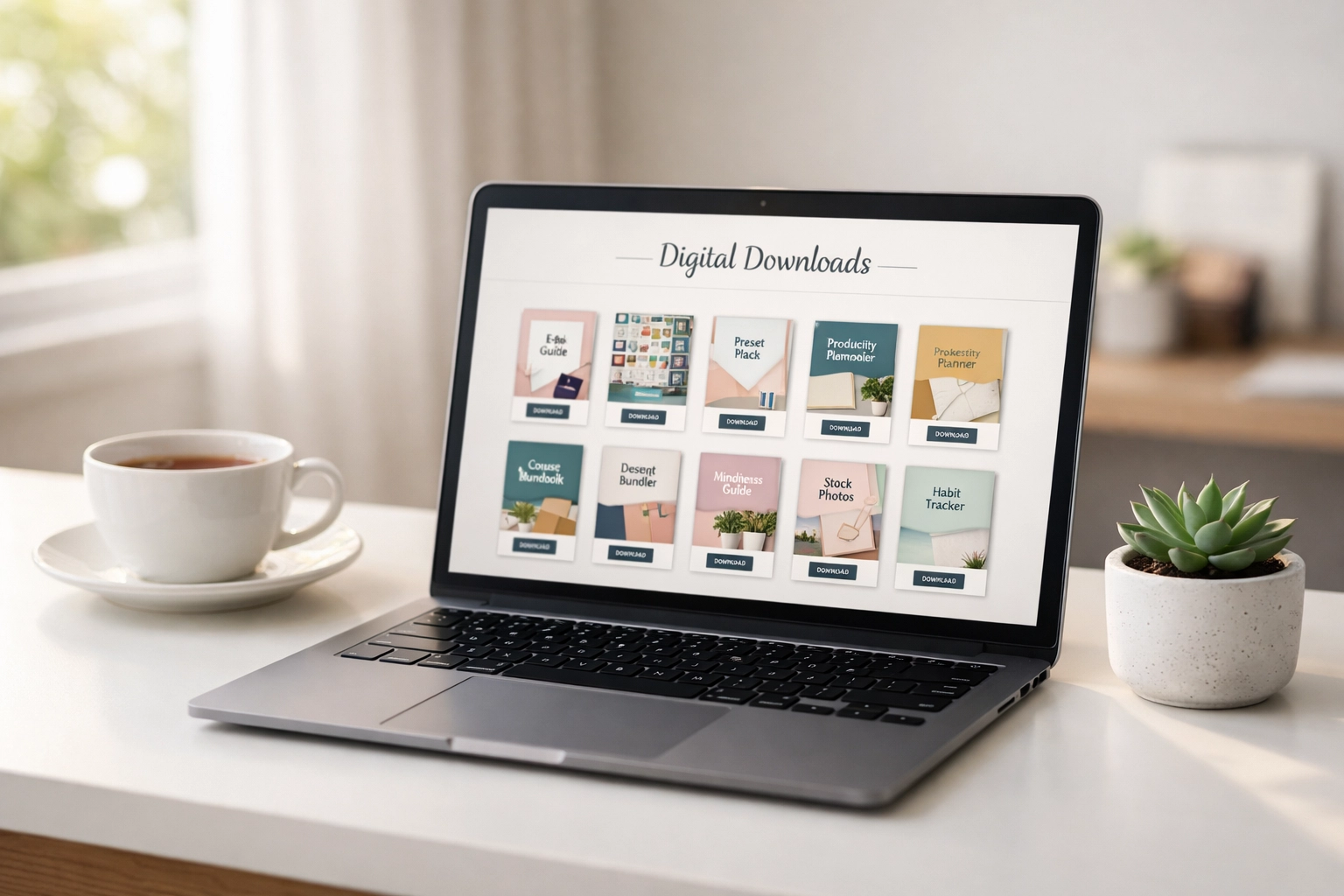
- Educational Content: eBooks, mini-courses, or "how-to" guides.
- Templates: Budget spreadsheets, Canva social media templates, or Notion planners.
- Creative Assets: Stock photos, font designs, or digital art prints.
- Professional Tools: Resume templates, legal contract templates, or business plan outlines.
If you are already looking into How to Start a Dividend Investing Portfolio for Passive Income, you might even create a digital tracker that helps others manage their stocks! See how that works? You use your knowledge to create a tool.
Step 2: Types of Digital Products You Can Create Today
You don't need to be an expert to create something valuable. You just need to be one step ahead of the person you are helping. Here are a few beginner-friendly ideas:
1. PDF Guides and eBooks
This is the classic digital product. If you know how to do something, like meal prepping, training a puppy, or mastering Excel, you can write a guide. It doesn't have to be a novel; even a 20-page "Quick Start Guide" is highly valuable.
2. Checklists and Workbooks
People love shortcuts. Instead of a long book, give them a 2-page checklist that ensures they don't miss any steps when performing a task. These are incredibly easy to make in tools like Canva.
3. Spreadsheets and Templates
Are you a wizard with Google Sheets? Create a monthly budget tracker or a project management template. People will gladly pay $10 or $20 to save five hours of building a spreadsheet themselves.
4. Digital Art and Printables
From wedding invitations to nursery wall art, the "printable" market is huge. Customers buy the file, download it, and print it at home.

Step 3: Tools of the Trade (The Easy Way)
You don’t need to be a graphic designer. We live in the age of AI and simple drag-and-drop tools.
- Canva: This is your best friend. Use it to design eBooks, templates, and social media graphics. They have thousands of templates you can customize.
- ChatGPT: Use AI to help you outline your eBook or write your product descriptions. It’s like having a free personal assistant to help you brainstorm.
- Loom: If you’re making a mini-course, use Loom to record your screen while you explain a topic. It’s simple and effective.
- Kittl: Great for creating complex designs and illustrations without needing to learn Photoshop.
Step 4: Setting Up Your Shop
Once your product is ready, you need a place for people to buy it. You don't need a fancy, expensive website right away.
Here are the best platforms for beginners:
- Etsy: Perfect for printables and templates. Etsy already has millions of shoppers, so it’s easier to get found. However, they do take a small fee for every sale.
- Payhip: This is one of my favorite recommendations for beginners. They have a "Free Forever" plan where they only take a small commission when you actually make a sale. It’s very easy to upload a PDF and start selling.
- Shopify: If you want to build a serious brand and have full control over your store, Shopify is the gold standard.
- Gumroad: Very popular in the creator community. It’s simple, clean, and handles all the "boring" stuff like VAT and payment processing.
Step 5: How to Price Your Product
Pricing is a psychological game. If you price too low, people might think it’s "cheap" or low quality. If you price too high, you might scare off beginners.
A good strategy for your first product is the "No-Brainer Price." Usually, this is between $7 and $27. It’s a low enough price that a customer doesn't have to think too hard about spending the money. As you build a reputation and gather reviews, you can introduce "Premium" products priced at $97 or more.
Step 6: Marketing (Driving Traffic for Free)
You can have the best product in the world, but if nobody sees it, you won't make a cent. You need to drive traffic to your store.
Pinterest is a Powerhouse
Pinterest is not just for recipes; it’s a visual search engine. Create "Pins" that show off your product (like a mockup of your eBook) and link them directly to your shop. Pins can live for months or even years, bringing in passive traffic long after you posted them.
Use Social Media (TikTok & Instagram)
Short-form video is the fastest way to grow right now. Show behind-the-scenes footage of you creating the product or show the "Result" the product provides. If you made a budget template, show a video of you filling it out and how organized it makes you feel.
Email Marketing
Start an email list from day one. Offer a small "freebie" (like a 1-page PDF) in exchange for an email address. Once they are on your list, you can email them when you launch new products. This is how you build a long-term, sustainable business.

Step 7: The "Merge and Compound" Strategy
The secret to making real wealth with digital products is compounding. One product making $50 a month is great. But what if you had ten?
Once you have a successful product, try the "Merge Method." If you have an eBook on "How to Grow Tomatoes" and another on "How to Grow Peppers," merge them into a "Complete Home Gardening Bundle" and sell it for a higher price.
Keep adding to your portfolio. Over time, these small streams of income turn into a river.
Final Thoughts
Creating digital products isn't a "get rich quick" scheme. It takes work upfront to research, design, and set up your store. But once that work is done, the asset is yours forever.
Imagine waking up, checking your phone, and seeing that you made $40 while you were asleep. That’s the power of digital products. It changes your relationship with time and money.
If you’re looking for more ways to diversify your income, don’t forget to check out our other guides in this series. Whether it's Real Estate Investing or Best Passive Income Apps, the goal is always the same: building a life of freedom.
Now, what are you going to create? Grab a notebook, head over to Canva, and start your first draft today!
About the Author