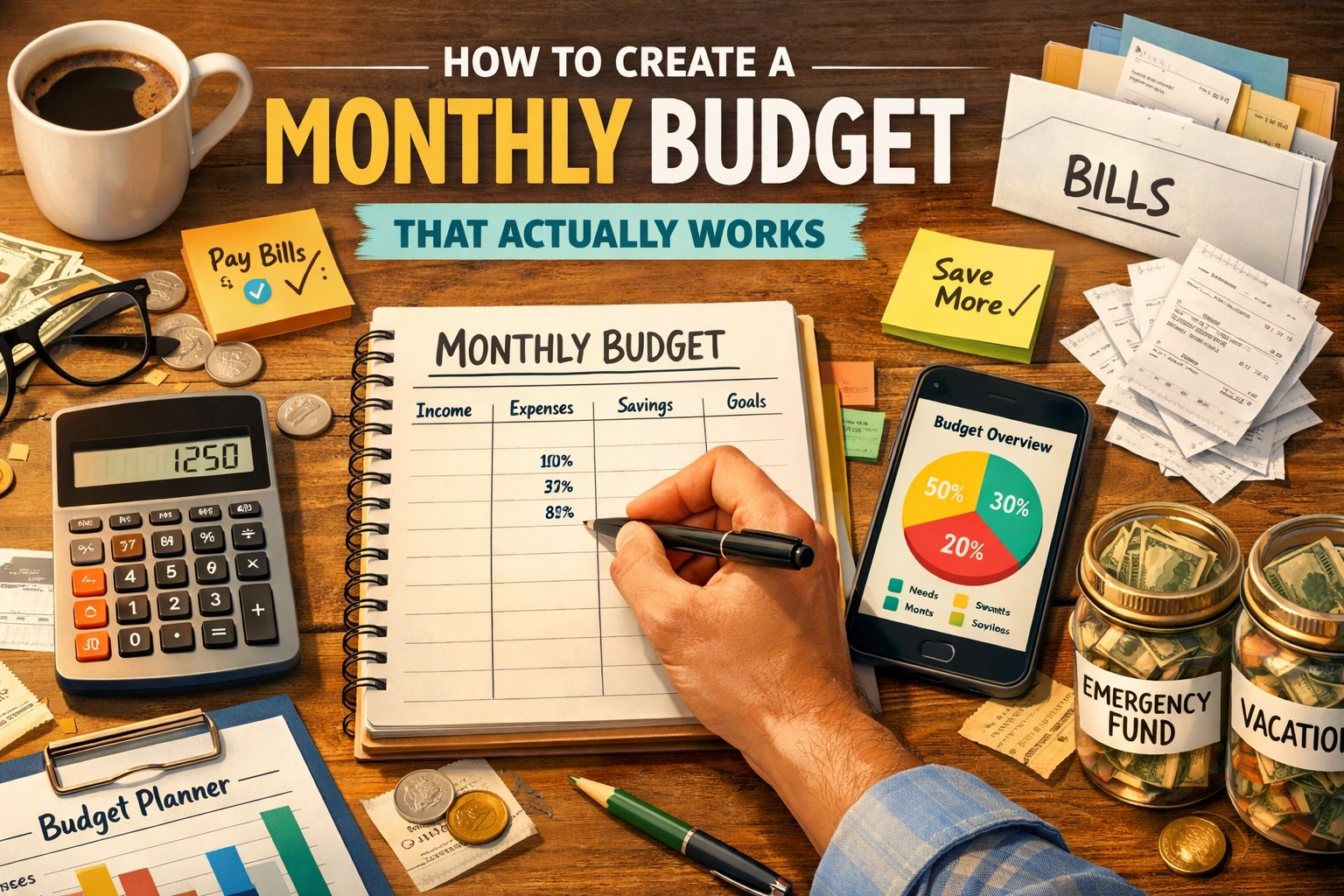
Let’s be real for a second: the word "budget" usually sounds about as exciting as a trip to the dentist for a root canal. Most of us think of a budget as a restrictive cage that stops us from having fun. We start one on the first of the month with high hopes, only to abandon it by the 15th when a surprise birthday dinner or a flat tire ruins the math.
But here’s the secret: a budget isn't meant to stop you from spending money. It’s meant to give you permission to spend money on the things that actually matter to you. It’s a roadmap for your life, not a set of handcuffs.
If you’ve tried and failed to budget before, it’s probably because your plan was too rigid or didn't reflect how life actually works in 2026. In this guide, we’re going to build a monthly budget that is realistic, sustainable, and: most importantly: actually works.
Step 1: Figure Out Your Real Take-Home Pay
The biggest mistake people make right out of the gate is budgeting based on their gross salary (the big number on your contract). But you don't actually see that money. Between taxes, health insurance, and retirement contributions, what hits your bank account is much smaller.
To start, you need your Net Income. This is your actual take-home pay.
- If you have a steady salary: Check your most recent paystubs. Multiply your take-home pay by the number of times you get paid in a month.
- If you’re a freelancer or have variable income: Look back at your lowest-earning month from the last year. Use that number as your baseline. It’s much easier to manage a surplus if you earn more than expected than it is to cover a deficit because you were too optimistic.
Knowing exactly what you have to work with is the only way to ensure the rest of the numbers add up.
Step 2: Track Your Spending (The Reality Check)
Before you can tell your money where to go, you need to see where it’s currently running off to. Most of us are shocked to find out how much we spend on "the little things": that daily oat milk latte, the three streaming services we forgot to cancel, or the midnight snacks at the gas station.
Take a look at your bank and credit card statements from the last three months. Group your expenses into two main buckets:
1. Fixed Expenses
These are the bills that stay roughly the same every single month. They are predictable and non-negotiable.
- Rent or mortgage
- Car payments
- Internet and phone bills
- Insurance premiums
- Subscription services (Netflix, Gym, etc.)
2. Variable Expenses
These are the costs that fluctuate based on your behavior or the time of year.
- Groceries
- Dining out and takeout
- Gas or transport
- Entertainment and hobbies
- Personal care (haircuts, skincare)

Step 3: Separate Needs from Wants
This is where the tough conversations happen. To build a budget that sticks, you have to be honest about what is an absolute necessity and what is a luxury.
Needs are the things you require to live and work: shelter, basic food, utilities, and transportation.
Wants are everything else: that weekend getaway, the latest tech gadget, or eating out four times a week.
The goal isn't to eliminate all "wants": that’s a recipe for burnout. The goal is to make sure your "needs" are covered first so you can enjoy your "wants" without the crushing weight of guilt or debt.
Step 4: Choose Your Budgeting Strategy
There is no "one size fits all" when it comes to money. The best method is simply the one you can stick to for more than thirty days. Here are three popular frameworks to consider:
The 50/30/20 Rule
This is the gold standard for simplicity. It suggests:
- 50% of your income goes to Needs.
- 30% of your income goes to Wants.
- 20% of your income goes to Savings and Debt Repayment.
It’s great because it builds in "fun money" automatically. If your needs are currently taking up 70% of your income, don't panic. Use this as a target to work toward by either cutting costs or increasing your income.
Zero-Based Budgeting
This method gives every single dollar a job. If you earn $4,000 this month, you assign all $4,000 to different categories (including savings) until you have $0 left. This doesn't mean you have $0 in your bank account; it just means every cent has a purpose. It’s highly effective for people who feel like their money just "disappears."
The Envelope Method (or "Cash Stuffing")
If you struggle with overspending on a card, go old school. You set a limit for a category (like groceries), withdraw that amount in cash, and put it in an envelope. Once the envelope is empty, you're done spending in that category for the month. In 2026, many banking apps offer "digital envelopes" or "vaults" that let you do this without carrying actual paper money.

Step 5: Prioritize Your Savings and Emergency Fund
A budget that doesn't include savings is just a list of ways to stay broke. Before you allocate money for a new pair of shoes, you need to pay your future self.
If you don't have one yet, your first priority is an Emergency Fund. Life happens: cars break down, laptops die, and medical bills appear out of nowhere. Aim to save at least $1,000 as a "starter" fund, then eventually build it up to cover 3–6 months of living expenses. Having this cushion is the difference between a minor inconvenience and a financial disaster.
Step 6: Use the Right Tools
You don't need a PhD in Excel to manage your money. In fact, if the tool is too complicated, you won't use it.
- Apps: There are incredible AI-driven budgeting apps in 2026 that sync with your bank accounts and categorize your spending automatically.
- Spreadsheets: If you like total control, a simple Google Sheet or Excel template works wonders.
- Pen and Paper: Some people find that physically writing down their expenses makes them more mindful of their spending.
Pick the tool that feels the least like a chore.

Step 7: The "Guilt-Free" Buffer
One reason budgets fail is that they are too optimistic. We plan for a "perfect" month, but perfect months don't exist. There will always be a random birthday gift, a school fundraiser, or a sudden craving for expensive sushi.
Build a "Miscellaneous" or "Stuff I Forgot" category into your budget. Give it a small amount: maybe $50 or $100. This acts as a shock absorber. When you inevitably spend a little more than planned in one area, this buffer saves your whole budget from collapsing.
Step 8: Review, Adjust, and Be Kind to Yourself
Your budget is a living document. It’s not written in stone. Your life changes, and your budget should change with it.
Set a "Money Date" once a week. Spend 15 minutes checking your spending against your plan. Did you overspend on groceries? No big deal: just take a little bit out of your "entertainment" fund to cover it. The key is to catch the overspending early so you can pivot.
If you have a bad week and completely blow your budget, don't give up. Don't tell yourself "I'm just bad with money." You wouldn't throw away your phone just because you dropped it once, right? You’d pick it up and keep going. Your budget is the same. Reset, learn why it happened, and start fresh the next day.
Summary Checklist for Success:
- Calculate your take-home pay (the actual cash in your hand).
- List your fixed bills (the ones that don't change).
- Set a limit for variable spending (groceries, fun, etc.).
- Pay yourself first (put something into savings immediately).
- Build in a buffer (for the "oops" moments).
- Review weekly (stay on top of the numbers).
Creating a budget that works isn't about math; it’s about habits. It’s about deciding that you want to be the boss of your money instead of wondering where it went. Start today, keep it simple, and watch how much faster you reach your goals when you actually have a plan.
About the Author