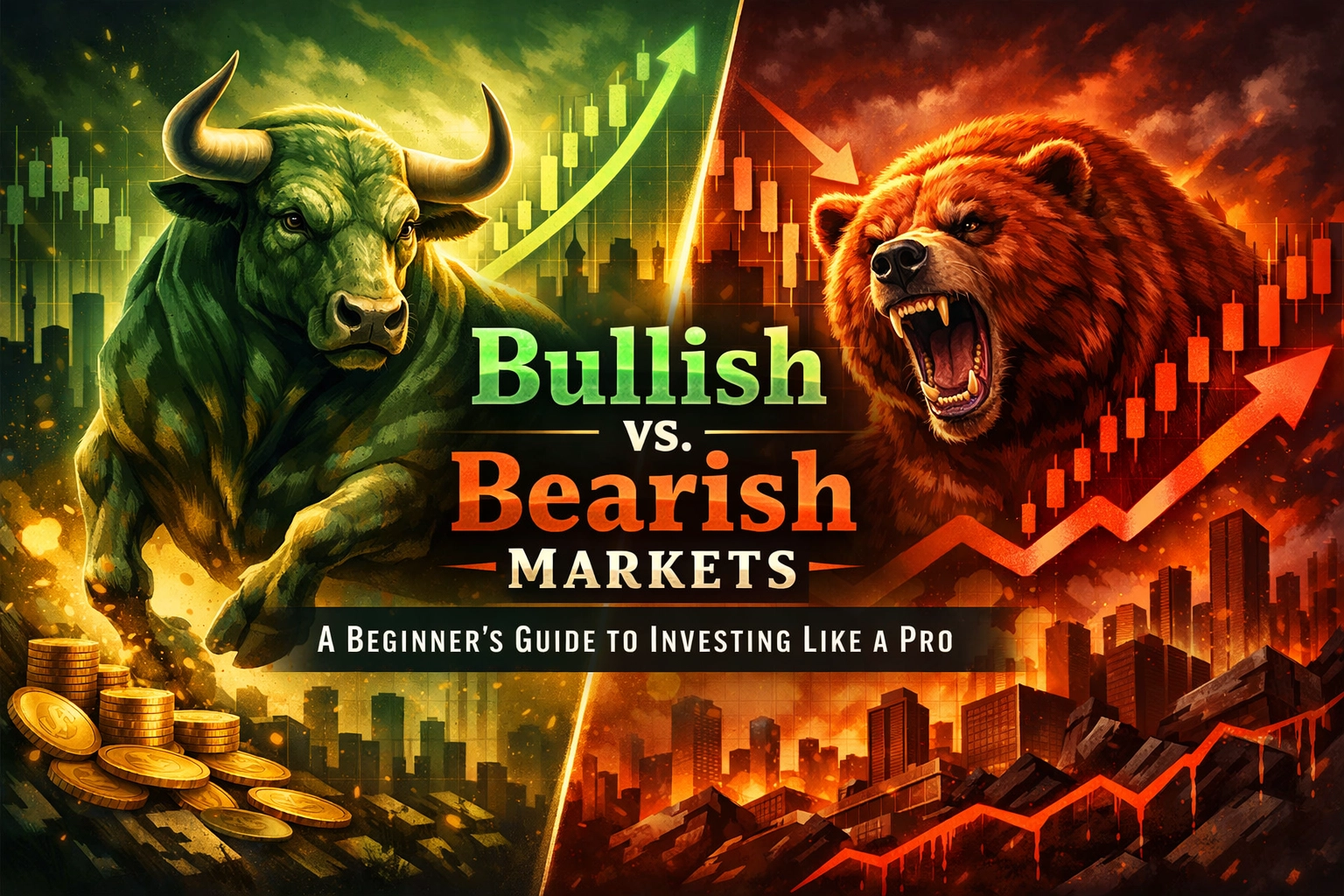
If you’ve spent more than five minutes scrolling through financial news or checking your investment app lately, you’ve probably heard people tossing around animal names like they’re at a zoo. "The bulls are running!" or "Watch out, the bears are taking over!"
In the world of personal finance, these aren't just mascots. They represent the two most important moods of the stock market. Especially now in 2026, as we navigate a unique economic landscape where inflation is finally cooling down and AI is changing how we manage our money, understanding whether we’re in a bull or bear market is the difference between building long-term wealth and making a panic-driven mistake.
Let’s break down everything you need to know about bullish vs. bearish markets so you can start investing like a pro.
What is a Bull Market? (The Charging Bull)
Think of a bull. When a bull attacks, it thrusts its horns upward into the air. That’s exactly what the market is doing in a bull market: prices are charging up.
Technically speaking, a bull market is defined as a period where stock prices rise by 20% or more from a recent low. But it's about more than just numbers; it’s about a vibe. In a bull market, investor confidence is sky-high. People are optimistic about the future, businesses are expanding, and everyone feels like a genius because their portfolio is "in the green."
Why 2026 Feels Bullish for Some
As we hit the mid-point of 2026, we’re seeing some classic bullish signals. With interest rates finally stabilizing and the "AI boom" moving from hype to actual corporate profits, many sectors are seeing massive growth. When people have disposable income and they believe the economy is strong, they buy more stocks. This demand drives prices even higher, creating a "virtuous cycle."

What is a Bear Market? (The Hibernating Bear)
Now, think of a bear. When a bear attacks, it swipes its paws downward. In a bear market, the economy is swiping down on your portfolio.
A bear market is officially triggered when stock prices drop by 20% or more from their recent highs. This is usually accompanied by a lot of "gloom and doom" in the news. Investors get scared, they start selling their shares to avoid losing more money, and this selling pressure pushes prices even lower.
The Warning Signs
Bear markets often happen when the economy starts to slow down. Maybe unemployment is rising, or perhaps a sudden global event has shaken everyone's confidence. In a bear market, "cash is king," and people tend to move their money out of "risky" stocks and into safer spots like high-interest savings accounts or government bonds.
Bull vs. Bear: The Key Differences
To help you keep it straight, here’s a quick cheat sheet on how these two market types compare:
| Feature | Bull Market | Bear Market |
|---|---|---|
| Stock Prices | Rising (Up 20%+) | Falling (Down 20%+) |
| Investor Mood | Optimistic, confident | Pessimistic, fearful |
| Economy | Expanding, low unemployment | Slowing down, higher unemployment |
| Strategy | "Buy and Hold" | "Capital Preservation" |
| Metaphor | Horns up! | Paws down! |
The Psychology of Investing: Why Most People Fail
Here is a secret that the "pros" won't always tell you: the market isn't just about math; it’s about psychology.
In a Bull Market, the biggest danger is Greed. When everything is going up, people get "FOMO" (Fear Of Missing Out). They start buying speculative assets or over-leveraging themselves because they think the party will never end. This is how bubbles are formed.
In a Bear Market, the biggest danger is Fear. When you see your account balance drop by 15% or 20%, your instinct is to "sell everything" to stop the bleeding. But as the saying goes: "You only lose money if you sell." Historically, every bear market has been followed by a bull market that eventually reaches new highs.

How to Invest Like a Pro in 2026
You don't need a Wall Street degree to handle market volatility. You just need a plan. Here are four strategies to help you stay ahead of the curve in the 2026 economic environment.
1. Master Dollar-Cost Averaging (DCA)
This is the ultimate "pro" move. Instead of trying to "time the market" (guessing when the bottom or top is), you invest a fixed amount of money at regular intervals: like $200 every month: no matter what the market is doing.
- When it's Bullish: You buy fewer shares because they are expensive.
- When it's Bearish: You buy more shares because they are "on sale."
Over time, this lowers your average cost per share and takes the emotion out of investing.
2. Diversification is Your Shield
Don't put all your eggs in one basket. If you only own tech stocks and the tech sector takes a hit, your whole portfolio dies. A pro portfolio in 2026 includes a mix of:
- Index Funds: These give you a piece of hundreds of different companies.
- International Stocks: As we've discussed before, international markets are the "secret sauce" for 2026.
- Bonds or Cash: To act as a cushion when things get bumpy.
3. Keep an Eye on Interest Rates
In 2026, the Federal Reserve’s decisions still dictate the market's mood. Lower interest rates generally lead to bull markets because it’s cheaper for businesses to borrow money and grow. Higher rates often lead to bear markets because borrowing becomes expensive and consumers spend less.
4. Use AI Tools Wisely
We’re living in the age of AI-driven finance. Use modern apps to track your net worth, categorize your spending, and even alert you when your portfolio is getting "unbalanced." However, don't let an algorithm make all your decisions. You still need to understand the fundamentals of what you own.

How Long Do These Markets Last?
The good news? Bull markets usually last much longer than bear markets. On average, a bull market can run for several years (the one after the 2008 crash lasted over a decade!). Bear markets, while painful, typically last anywhere from a few months to two years.
In 2026, we are seeing shorter, more intense cycles. Information moves faster than ever because of social media and high-frequency trading. This means you need to be even more disciplined about not checking your accounts every five minutes.
Common Mistakes to Avoid
Before you run off to adjust your portfolio, make sure you aren't falling into these beginner traps:
- Waiting for the "Perfect" Time: There is no perfect time. The best time to start was ten years ago; the second-best time is today.
- Checking Your Balance Daily: During a bear market, this is a recipe for a panic attack. If you are an investor for the long term (5-10+ years), daily fluctuations don't matter.
- Ignoring the "Emergency Fund": Never invest money that you might need in the next six months. If a bear market hits and you lose your job, you don't want to be forced to sell your stocks at a 30% loss just to pay rent.

Final Thoughts: Stay the Course
Whether the bulls are running or the bears are growling, your job as an investor stays the same: stay consistent, stay diversified, and keep your eyes on the long-term goal.
The 2026 economy offers plenty of opportunities for those who are patient. Inflation is settling, tech is evolving, and global markets are opening up. By understanding the difference between bullish and bearish sentiment, you can stop reacting to the news and start making calculated moves that build real wealth.
Investing isn't about being right every single day; it's about being "in the game" long enough for the market's natural upward trend to do the heavy lifting for you.
Ready to take the next step? Start by reviewing your current portfolio. Are you too heavy in one sector? Do you have enough "dry powder" (cash) to take advantage of the next market dip?
Investing like a pro starts with thinking like one. See you at the top!
About the Author