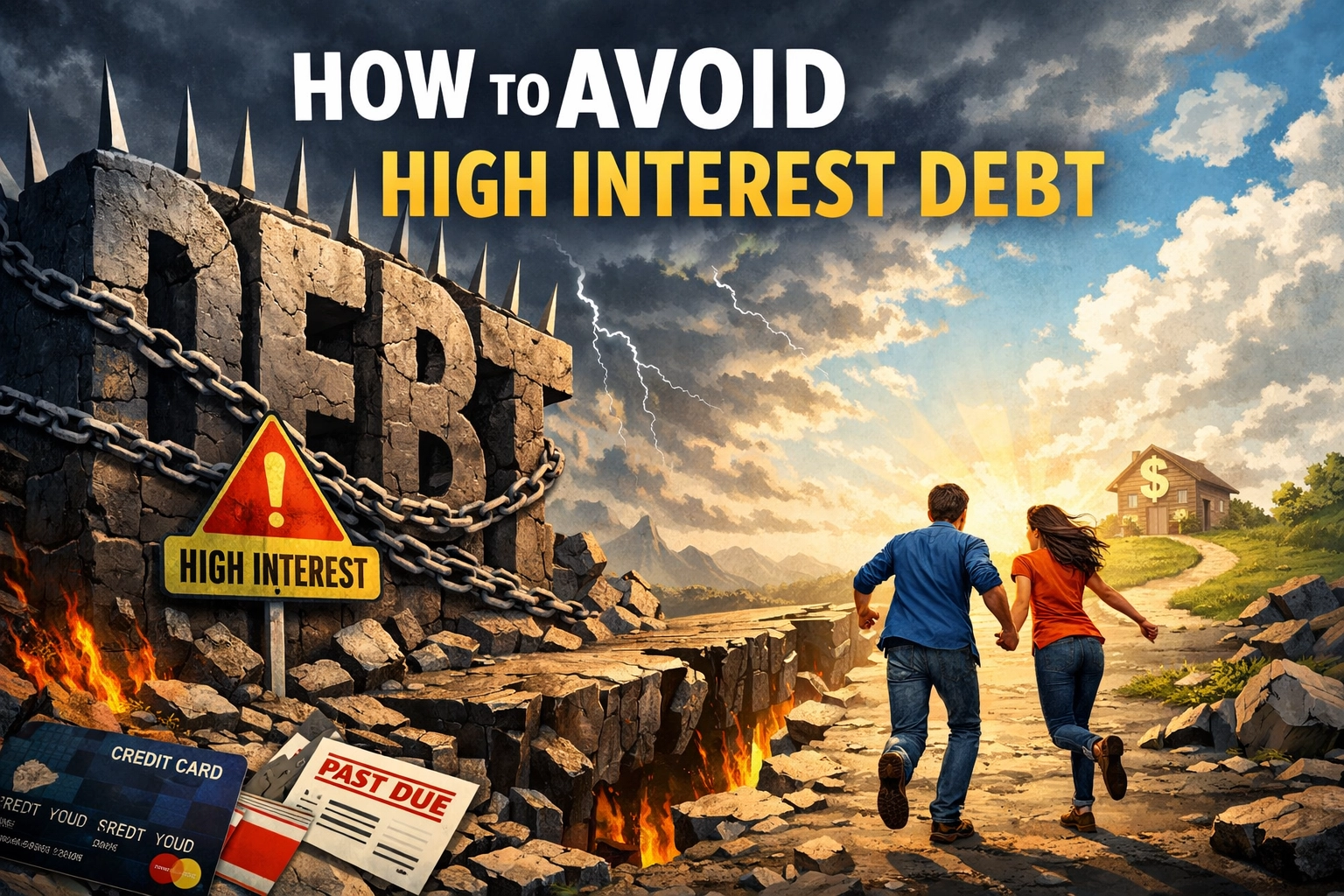
Getting into debt is easy. Getting out of it? That’s the hard part.
When we talk about debt, not all of it is created equal. There’s the kind of debt that helps you grow: like a low-interest student loan or a mortgage: and then there’s the kind that acts like a weight around your neck. We’re talking about high-interest debt. This is the stuff that grows faster than you can pay it off, keeping you stuck in a cycle of payments that never seem to end.
As the CEO of a company focused on financial literacy, I’ve seen too many people fall into "interest traps." These are designed to look like quick fixes for financial problems, but they usually end up making those problems ten times worse.
The best way to handle high-interest debt is to never have it in the first place. Here is your guide on how to spot the traps, build your defenses, and stay in control of your money.
What Exactly is High-Interest Debt?
Before we can avoid it, we have to define it. Generally, high-interest debt is any money you owe that carries an interest rate significantly higher than the market average.
Think of interest as the "rent" you pay to use someone else’s money. For a mortgage, that rent might be 6% or 7%. For a credit card, it’s often 20% to 30%. For a payday loan? It can be as high as 400%.
When the interest rate is that high, your monthly payments mostly go toward the interest "rent" rather than the actual balance you borrowed. This is how people end up paying $5,000 for a $1,000 loan over a few years.
1. Spotting the Red Flags of Predatory Lending
Predatory lenders are the sharks of the financial world. They look for people who are in a pinch and offer "easy" money with strings attached that are meant to trip you up. If you see these red flags, turn around and walk away:
- Extremely High APR: If the Annual Percentage Rate (APR) isn’t clearly stated or if it’s in the triple digits, it’s a trap.
- Guaranteed Approval: No reputable lender guarantees approval without checking your ability to pay. "No credit check" usually means "we don't care if you can afford this because we’re going to charge you so much interest it won't matter."
- Hidden Fees: If there are "administrative fees," "origination fees," or "processing fees" that weren't mentioned upfront, be careful.
- Balloon Payments: This is a loan where the monthly payments are small, but then you’re hit with one massive payment at the end. If you can't pay that big chunk, you're forced to refinance into another high-interest loan.
- High-Pressure Tactics: If a lender is pushing you to sign right now or telling you that the offer will expire in an hour, they are trying to stop you from thinking clearly.

2. The Debt Traps to Avoid at All Costs
There are specific types of financial products that are almost always a bad idea. Avoiding these is the first step to financial freedom.
Payday Loans
These are perhaps the most dangerous. You borrow a small amount of money (usually a few hundred dollars) and agree to pay it back when your next paycheck arrives. The problem is that the fees are so high that when your paycheck comes, you don't have enough money left for your bills, so you have to take out another payday loan. This is the "Payday Loan Cycle."
Title Loans
Similar to payday loans, but you use your car as collateral. If you can’t pay back the high-interest loan, the lender takes your car. Now you have no money and no way to get to work.
Rent-to-Own Stores
Buying a couch or a TV through a rent-to-own store might feel like it’s only "$20 a week," but by the time you own that item, you will likely have paid three or four times what it’s actually worth.
3. Your Best Defense: The Emergency Fund
The number one reason people take on high-interest debt is an emergency. The car breaks down, the fridge stops working, or there’s a medical bill. Without cash on hand, the credit card or the "quick loan" store feels like the only option.
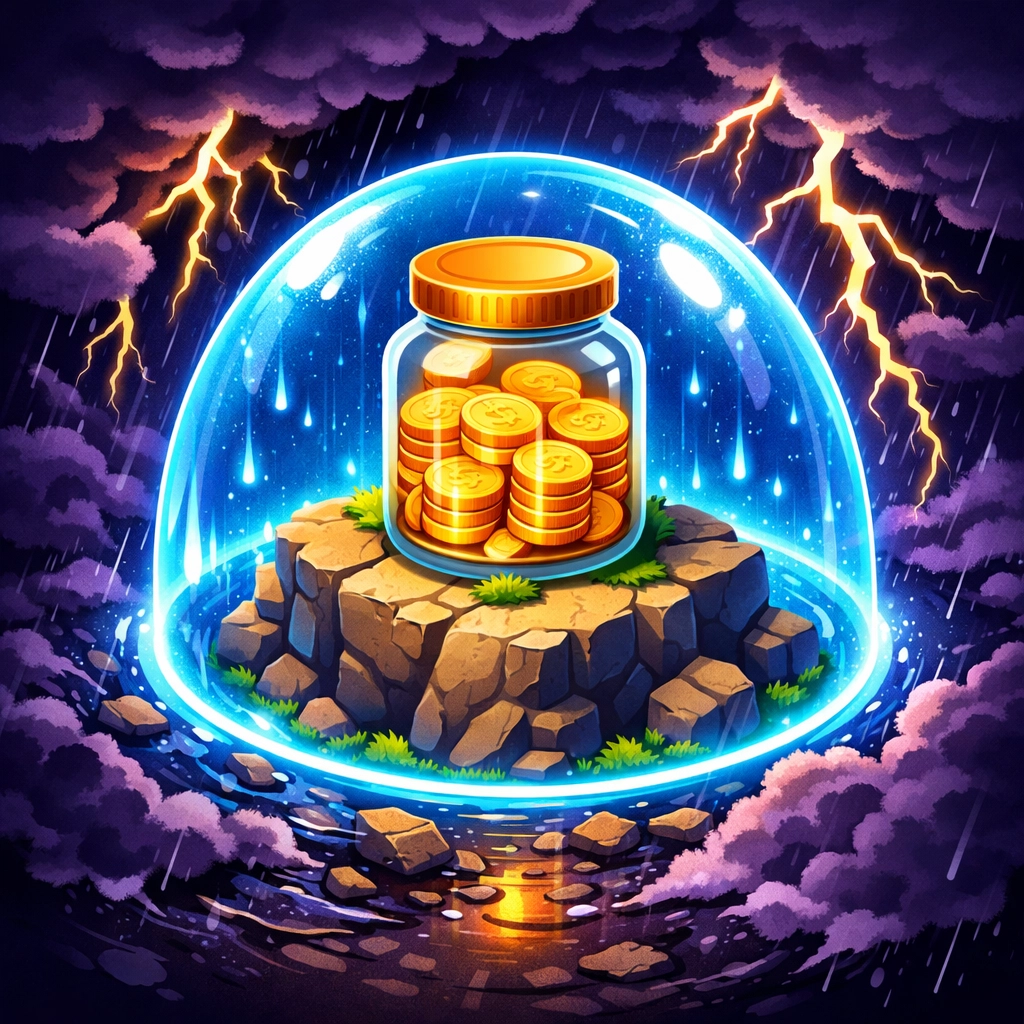
This is why an emergency fund is your "debt vaccine."
You don't need $10,000 today. Start small. Aim for $500. Then $1,000. Keep this money in a separate savings account that you don't touch for daily spending. When the "emergency" happens, you pay yourself back instead of paying a lender 30% interest.
4. Master the Credit Card Game
Credit cards aren't inherently evil, but they are the most common source of high-interest debt. To avoid the trap, you have to understand the rules.
- Pay in Full Every Month: If you pay your statement balance in full by the due date, you pay zero interest. You are essentially using the bank’s money for free for 30 days.
- The "Minimum Payment" Trap: The minimum payment is designed to keep you in debt for as long as possible. If you only pay the minimum on a $3,000 balance, it could take you 15 years to pay it off and cost you thousands in interest.
- Avoid Store Cards: That 15% discount at the checkout counter sounds great, but store credit cards often have much higher interest rates than standard bank cards. Unless you are 100% sure you will pay it off immediately, say "no thanks."
5. Be a Smart Borrower
Sometimes, you actually need a loan: maybe for a car or a necessary home repair. When you do, follow these steps to ensure you aren't getting ripped off:
- Shop Around: Don’t just take the first offer. Check with your local bank or a credit union. Credit unions are non-profits and often have much lower interest rates than big national banks or independent lenders.
- Know Your Score: Your credit score determines your interest rate. If your score is low, try to improve it before applying for a loan so you qualify for a lower rate.
- Read the Fine Print: Look for "Prepayment Penalties." You want a loan that allows you to pay it off early without charging you extra for doing so.

6. The Psychology of Spending
A lot of high-interest debt comes from "lifestyle creep" or trying to keep up with what we see on social media. We want the new phone or the vacation now, and we tell ourselves we’ll deal with the interest later.
To avoid this, try the 48-Hour Rule. If you see something you want to buy on credit, wait 48 hours. Usually, the "must-have" feeling fades, and you realize you’d rather have the peace of mind of a zero balance than the new gadget.
7. Seek Professional Help Before It’s Too Late
If you feel like you’re already sliding toward a high-interest trap, don't wait until you've signed the papers. Reach out to a non-profit credit counseling agency.
These organizations are there to help you create a budget, manage your current debt, and educate you on how to avoid future pitfalls. They are experts in spotting predatory terms and can often help you find better alternatives that you didn't know existed.
Final Thoughts
High-interest debt is like a leak in a boat. No matter how hard you row (work), if the leak is big enough, you’re still going to sink.
Avoiding high-interest debt is about discipline, patience, and a little bit of skepticism. Don't trust "easy money." Build your own safety net with an emergency fund, and always read the fine print.
Your future self will thank you for the interest you didn't pay. Keep it simple, stay focused on your goals, and remember: if a financial deal looks too good to be true, it’s probably a trap.
About the Author