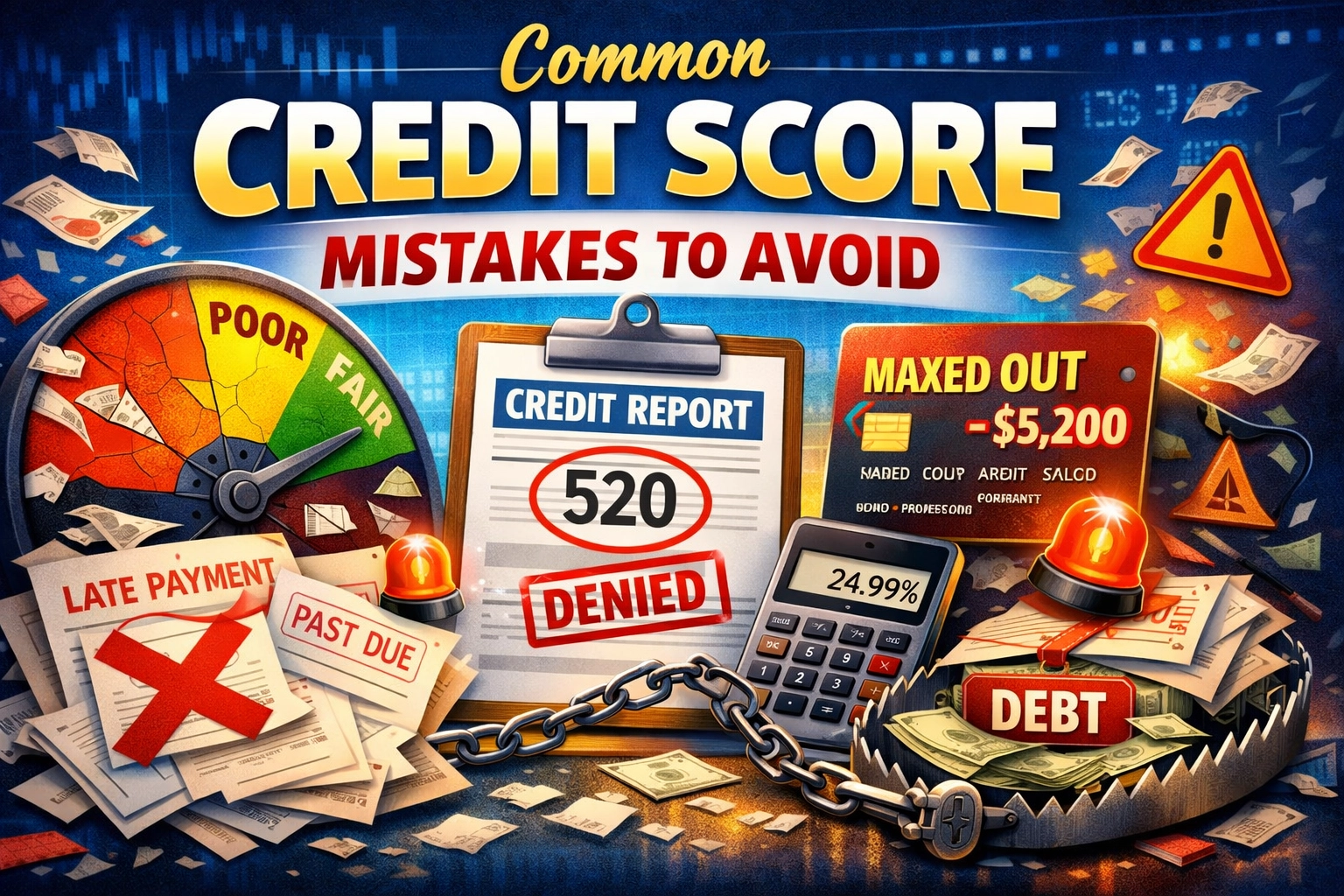
Let’s be real for a second: credit scores can feel like a game where the rules are written in a language nobody actually speaks. One day you’re doing great, and the next, your score drops ten points because you dared to pay off a loan or look at a new credit card. It’s frustrating, I get it.
As the CEO here at blog and youtube, I’ve seen how much a solid credit score opens doors. Whether you’re trying to snag a better interest rate on a car, rent a nice apartment, or even get a better deal on your cell phone plan, that three-digit number carries a lot of weight.
The problem is that most people don’t realize they’re making mistakes until the damage is already done. We often fall into habits that seem logical but actually drive our scores into the dirt. Today, we’re going to pull back the curtain on the most common credit score mistakes and, more importantly, how you can avoid them.
1. The "I’ll Pay It Next Week" Trap
If there is one thing you take away from this article, let it be this: Payment history is king.
In the world of FICO® Scores, your payment history accounts for a massive 35% of your total score. That is the single biggest slice of the pie. Even a single payment that is 30 days late can knock a significant chunk off your score.
Many people think, "Oh, I'll just pay the late fee, it’s no big deal." While the bank might be happy to take your $35 late fee, the credit bureau isn't so forgiving. A late payment stays on your credit report for seven years.
How to avoid it:
The simplest fix is automation. Set up "Auto-Pay" for at least the minimum amount on every single bill you have. Even if you plan to pay more later in the month, having that safety net ensures you never cross that 30-day "danger zone." If you do miss a payment by a few days, call the creditor immediately. If you’ve been a good customer, they might waive the fee and promise not to report it to the bureaus.

2. Redlining Your Credit Cards (High Utilization)
Imagine you have a credit card with a $1,000 limit. You spend $900 on a new laptop and some groceries. You figure as long as you pay it off at the end of the month, you’re fine, right?
Wrong. This is where "Credit Utilization" comes in. This factor makes up 30% of your score.
Utilization is the ratio of how much credit you’re using compared to your total limit. In the eyes of the credit bureaus, if you are constantly using more than 30% of your available credit, you look "risky." It signals to lenders that you might be overextended or relying too heavily on borrowed money to get by.
How to avoid it:
The golden rule is to keep your utilization under 30%, but if you really want to see your score soar, try to keep it under 10%. If you have a $1,000 limit, try not to let your balance exceed $300 at any point during the billing cycle. If you have a big purchase coming up, pay it off before the statement closing date, not just before the due date. This ensures the high balance never even gets reported to the credit bureaus.
3. The "New Year, New Me" Credit Spree
We’ve all been there. You’re at the mall, and three different stores offer you a 20% discount if you open a store credit card. Or maybe you’re hunting for a new car and a new apartment at the same time.
Every time you apply for credit, the lender performs what’s called a "Hard Inquiry." This tells the bureaus you’re looking for money. One hard inquiry isn't a big deal: it might drop your score by 5 points or so. But when you have five or six inquiries in a short period? That’s a red flag. It looks like you’re desperate for cash, which makes lenders nervous.
How to avoid it:
Space out your applications. If you’re planning a major move (like buying a house), avoid opening any new credit lines for at least six months to a year beforehand.
The one exception is "Rate Shopping." If you’re looking for a mortgage or an auto loan, the credit bureaus understand you’re looking for the best deal. Usually, multiple inquiries for the same type of loan within a 14-to-45-day window are treated as a single inquiry.

4. Only Making the Minimum Payments
This is a mistake that hurts your wallet just as much as your credit score. When you only pay the minimum, you aren't really making a dent in your debt. Most of that payment goes straight toward interest.
As your interest piles up, your balance grows. As your balance grows, your credit utilization (that 30% we talked about earlier) goes up. It’s a vicious cycle. You end up trapped in "Minimum Payment Purgatory," where you’re paying every month but your debt: and your score: never improves.
How to avoid it:
Treat your credit card like a debit card. If you can’t afford to pay the full balance at the end of the month, don’t put it on the card. If you’re already in debt, try the "Debt Snowball" or "Debt Avalanche" methods to pay down balances faster. Getting those balances down is the quickest way to see a massive jump in your score.
5. Closing Old Credit Accounts
It sounds like a smart move. You finally paid off that old credit card from college that you haven't used in years. Your first instinct is to close the account and cut up the card.
Wait! Don't do that.
Closing an account can actually hurt your score in two ways:
- It lowers your total available credit: If you close a card with a $2,000 limit, your overall credit limit drops. Suddenly, the balances on your other cards represent a higher percentage of your total limit, which spikes your utilization.
- It shortens your "Length of Credit History": This accounts for 15% of your score. Lenders like to see that you’ve been managing credit for a long time. If you close your oldest account, you’re essentially erasing years of good history.
How to avoid it:
If the card doesn’t have an annual fee, just keep it open. Put a small recurring charge on it: like a $10 Netflix subscription: and set it to auto-pay. This keeps the account "active" without you having to worry about it. If the card does have an expensive annual fee, call the bank and ask if you can "downgrade" it to a no-fee version instead of closing it.

6. Ignoring Your Credit Report Entirely
Think your credit report is 100% accurate? Think again. A recent study found that nearly 44% of people found at least one error on their credit report.
Errors happen all the time. A bank might report a payment as late when it wasn't, or someone with a similar name might have their debts mixed up with yours. Even worse, an error could be a sign of identity theft. If someone opens an account in your name and doesn't pay it, your score will tank, and you won't even know why.
How to avoid it:
You are entitled to a free credit report from each of the three major bureaus (Equifax, Experian, and TransUnion) every year via AnnualCreditReport.com.
Make it a habit to check yours at least once a quarter. Look for:
- Accounts you don’t recognize.
- Addresses where you’ve never lived.
- Late payments that you actually paid on time.
- Credit limits that are reported lower than they actually are.
If you find an error, dispute it immediately. The bureaus are legally required to investigate and remove inaccuracies.

7. Being a "Ghost" (No Credit at All)
Some people are so afraid of debt that they avoid credit cards and loans entirely. They pay for everything in cash or with a debit card. While this is great for staying out of debt, it’s terrible for your credit score.
If you have no credit history, you are a "Ghost" to lenders. They have no data to tell them if you are a responsible borrower or not. When the time comes that you need a loan: like for a house or a car: you’ll likely be denied or hit with an astronomical interest rate.
How to avoid it:
You don't need to carry debt to have a good credit score. You just need to show activity. If you're starting from zero, look into a Secured Credit Card. You provide a deposit (say $200), and that becomes your limit. Use it for small things, pay it off in full every month, and you’ll build a solid foundation without the risk of spiraling into debt.
Wrapping It Up
Improving your credit score isn't about magic tricks; it's about consistency. Avoid these common pitfalls, keep your balances low, and always: always: pay on time.
It might take a few months to see the needle move, but the financial freedom that comes with a high credit score is worth every bit of effort. If you’ve made some of these mistakes in the past, don't sweat it. The "past" is exactly where those mistakes stay as long as you start making better choices today.
Keep it simple, stay consistent, and watch those numbers climb!
About the Author