Let’s be honest: standing in March 2026, the financial landscape looks a bit different than it did a few years ago. We’ve seen inflation do its dance, interest rates play a game of "how high can we go," and now, as things start to settle, many of us are left holding a stack of bills that feel a little too heavy.
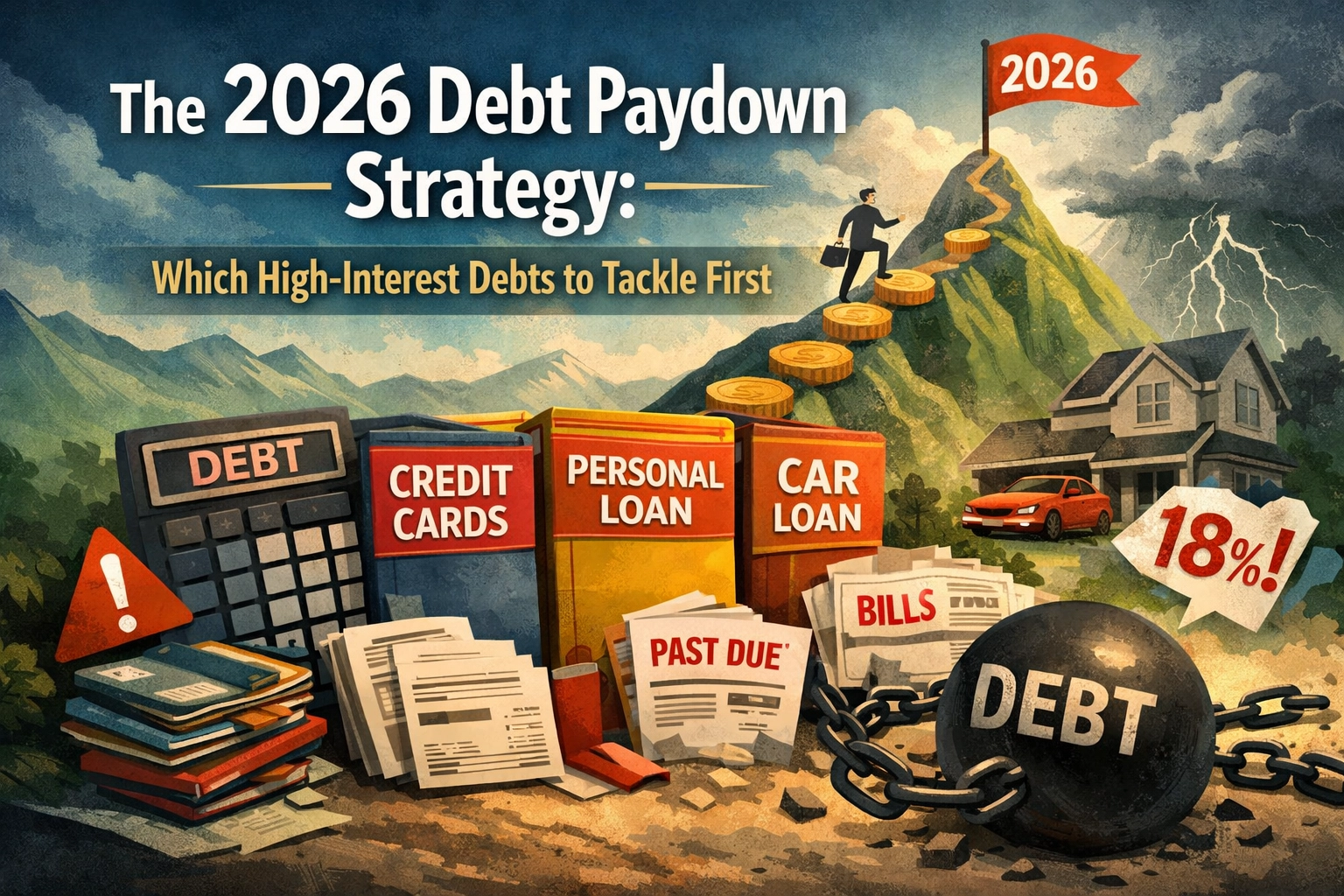
If you’re staring at your bank app and wondering why your balance isn’t growing while your credit card debt is, you’re not alone. Debt is like a backpack full of rocks: it’s hard to run toward your financial goals when you’re being dragged down. But here’s the good news: 2026 is the year we put those rocks down.
To get your head above water, you need more than just "trying to pay more." You need a battle plan. In this guide, we’re going to break down the best ways to tackle high-interest debt right now, compare the most popular strategies, and help you decide which one actually fits your life.
The Reality of Debt in 2026
We live in a world of "Buy Now, Pay Later" and high-interest credit cards. While interest rates are finally showing signs of easing, the rates on credit cards haven't dropped nearly as fast as we’d like. Most cards are still sitting comfortably between 20% and 30% APR.
When you carry a balance at 25% interest, you aren't just paying back what you borrowed for those groceries or that flight; you’re paying a massive "convenience tax" that compounds every single month. This is the "High-Interest Trap." If you only pay the minimums, you could be paying off a dinner date for the next decade.

Breaking free starts with a mindset shift. You have to view high-interest debt as a financial emergency. If your house was on fire, you wouldn't say, "I'll throw a cup of water on it next month." You’d grab the hose. Your debt is the fire.
The Two Heavy Hitters: Avalanche vs. Snowball
When it comes to debt repayment, two strategies dominate the conversation: the Debt Avalanche and the Debt Snowball. Both work, but they appeal to different parts of your brain.
1. The Debt Avalanche: The Logical Choice
The Debt Avalanche is all about the math. With this method, you list all your debts from the highest interest rate to the lowest. You ignore the balance size; you only care about that APR percentage.
- How it works: You pay the absolute minimum on every debt except the one with the highest interest rate. You throw every extra cent you have at that high-interest beast until it’s gone. Then, you move to the next highest interest rate.
- The Pro: You save the most money. By killing the high-interest debt first, you stop the most expensive "bleeding" immediately. You’ll pay less total interest over time and technically finish faster.
- The Con: It can feel slow. If your highest interest debt is a massive $15,000 credit card, it might take months before you feel the "win" of closing an account.
2. The Debt Snowball: The Psychological Choice
The Debt Snowball was popularized because, let's face it, humans aren't always logical: we’re emotional. This method focuses on the balance size rather than the interest rate.
- How it works: You list your debts from smallest balance to largest balance. You pay the minimum on everything and attack the smallest debt with everything you’ve got. Once that $300 store card is gone, you take the money you were paying on it and add it to the payment for the next smallest debt.
- The Pro: Quick wins. Closing an account in the first 30 days gives you a dopamine hit. It proves that you can do this, which keeps you motivated to tackle the bigger stuff.
- The Con: It’s more expensive. You might be paying off a 5% interest loan while a 28% credit card sits there getting bigger.
Which one should you choose in 2026?
Because interest rates are still relatively high across the board, the Debt Avalanche is technically the smarter move for your wallet. However, if you’ve tried and failed to get out of debt before, the Snowball is your best friend. The best strategy is the one you actually stick to.
Why Credit Cards Are the First Target
In 2026, the gap between "good debt" and "bad debt" is wider than ever. A mortgage at 6% or a car loan at 7% is manageable. A credit card at 27% is a wealth-killer.
When you're deciding what to tackle first, always look at the interest rate. Most personal finance experts suggest that anything with an interest rate above 10% should be considered "high-priority debt."
If you have a $5,000 credit card balance and a $5,000 student loan, but the card is at 22% and the loan is at 5%, the credit card is costing you nearly four times as much each month. That is where your focus needs to be.

2026 Strategy: Consolidation and Refinancing
If you’re drowning in multiple high-interest payments, 2026 offers some modern tools to help you simplify.
Balance Transfer Cards
If your credit score is still in decent shape, look for a 0% APR balance transfer card. These cards often give you 12 to 18 months of zero interest. This is a game-changer because 100% of your payment goes toward the principal. Just be careful: if you don’t pay it off before the promo ends, the interest kicks back in at a high rate.
Debt Consolidation Loans
This is where you take out one personal loan at a lower rate (say 10-12%) to pay off all your 25% credit cards. You’re left with one monthly payment and a clear end date. In the current 2026 economy, banks are becoming more competitive with these loans, so shop around.
AI-Driven Budgeting
We’re in the age of AI. Use it! There are dozens of apps now that use AI to analyze your spending and tell you exactly where you can "find" extra money to put toward your debt. They can even automate your "avalanche" by moving money to your highest-interest debt the moment your paycheck hits.
Your Step-by-Step Action Plan
Ready to get started? Don’t make it complicated. Follow these steps:
- The Master List: Write down every debt you have. Name of the lender, the total balance, the minimum monthly payment, and: most importantly: the interest rate.
- Pick Your Method: Decide right now: are you an Avalanche person or a Snowball person?
- Find the "Found" Money: Look at your subscriptions, your dining out, and those random "convenience" purchases. Even an extra $50 a month makes a difference when compounded over time.
- Automate the Minimums: Set all your debts to autopay for the minimum amount. You never want to pay a late fee: that’s just more wasted money.
- The Power Payment: Take all your extra cash and put it toward your #1 target.
- Don’t Add More: This is the hard part. While you’re paying off the cards, put them in a drawer. If you keep spending while you’re paying, you’re just treading water.
Staying Motivated When It Gets Tough
Debt repayment isn't a sprint; it’s a marathon. There will be months where an unexpected car repair pops up or you just feel tired of being "frugal."
When that happens, remind yourself why you’re doing this. Is it to buy a home? To travel? To finally stop feeling that knot in your stomach when you check your bank balance?
Visualize yourself as the person who is finally free from those credit card chains. In 2026, the best investment you can make isn’t in the stock market or crypto: it’s in paying off your own high-interest debt. That is a guaranteed return on your money that no bank can beat.
You’ve got the plan. You’ve got the tools. Now, it’s time to start. Let’s make 2026 the year you finally own your money, instead of your money owning you.
About the Author