Let’s be real: thinking about retirement when you’re young or busy building a career feels a bit like planning a vacation for the year 2050. It’s so far away that it’s easy to push it to the bottom of the "to-do" list. But here’s the thing: retirement planning is actually the ultimate form of passive income.
While we’ve talked about 10 Passive Income Ideas to Make Money While You Sleep, nothing beats the long-term wealth-building power of a solid retirement account. Whether you want to retire on a beach or just have the "work is optional" lifestyle, you need a place to put your money where it can grow tax-free (or tax-deferred).
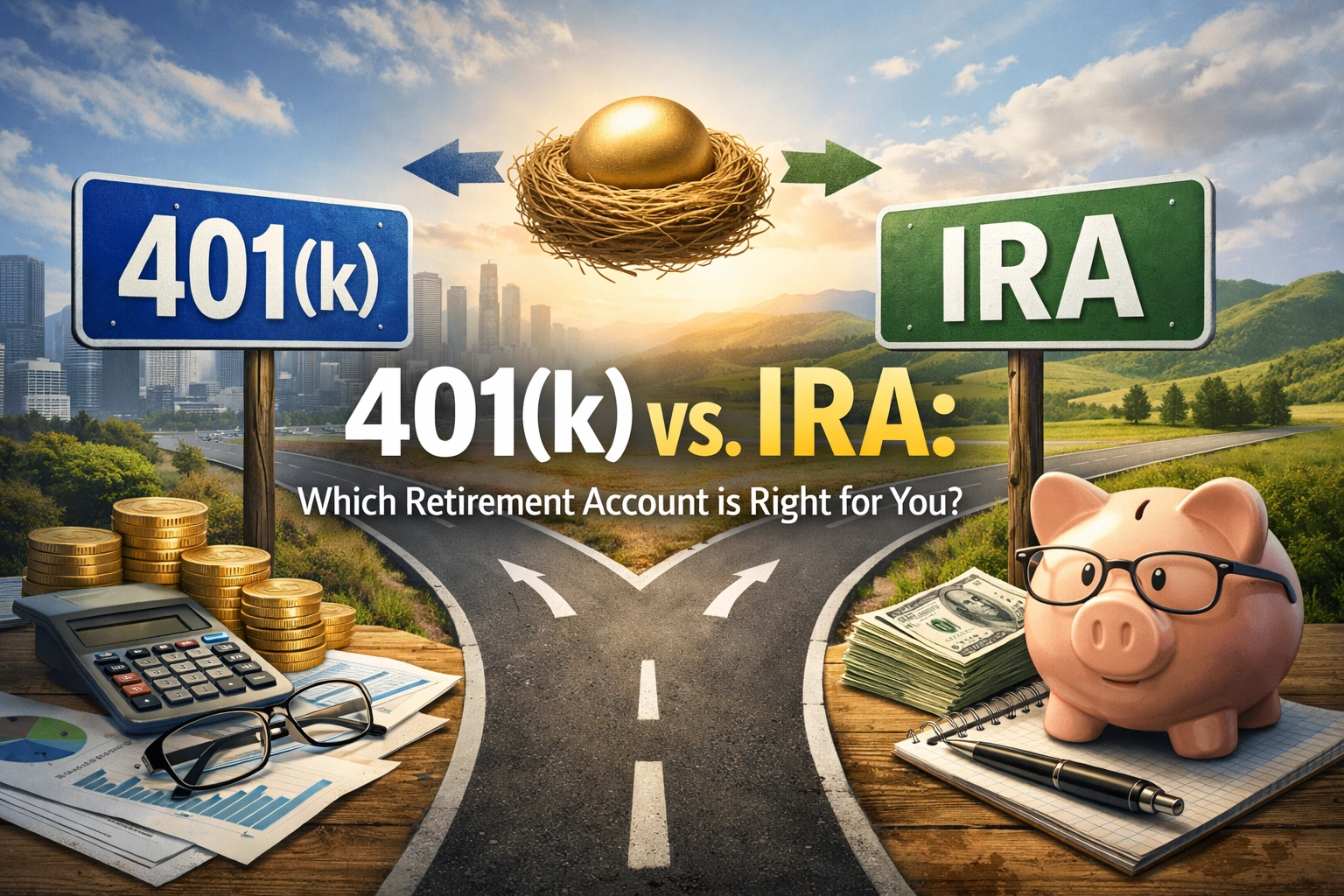
Today, we’re breaking down the two heavyweights of the retirement world: the 401(k) and the IRA. By the end of this, you’ll know exactly which one (or both!) is right for your wallet in 2026.
The 401(k): The Workplace Powerhouse
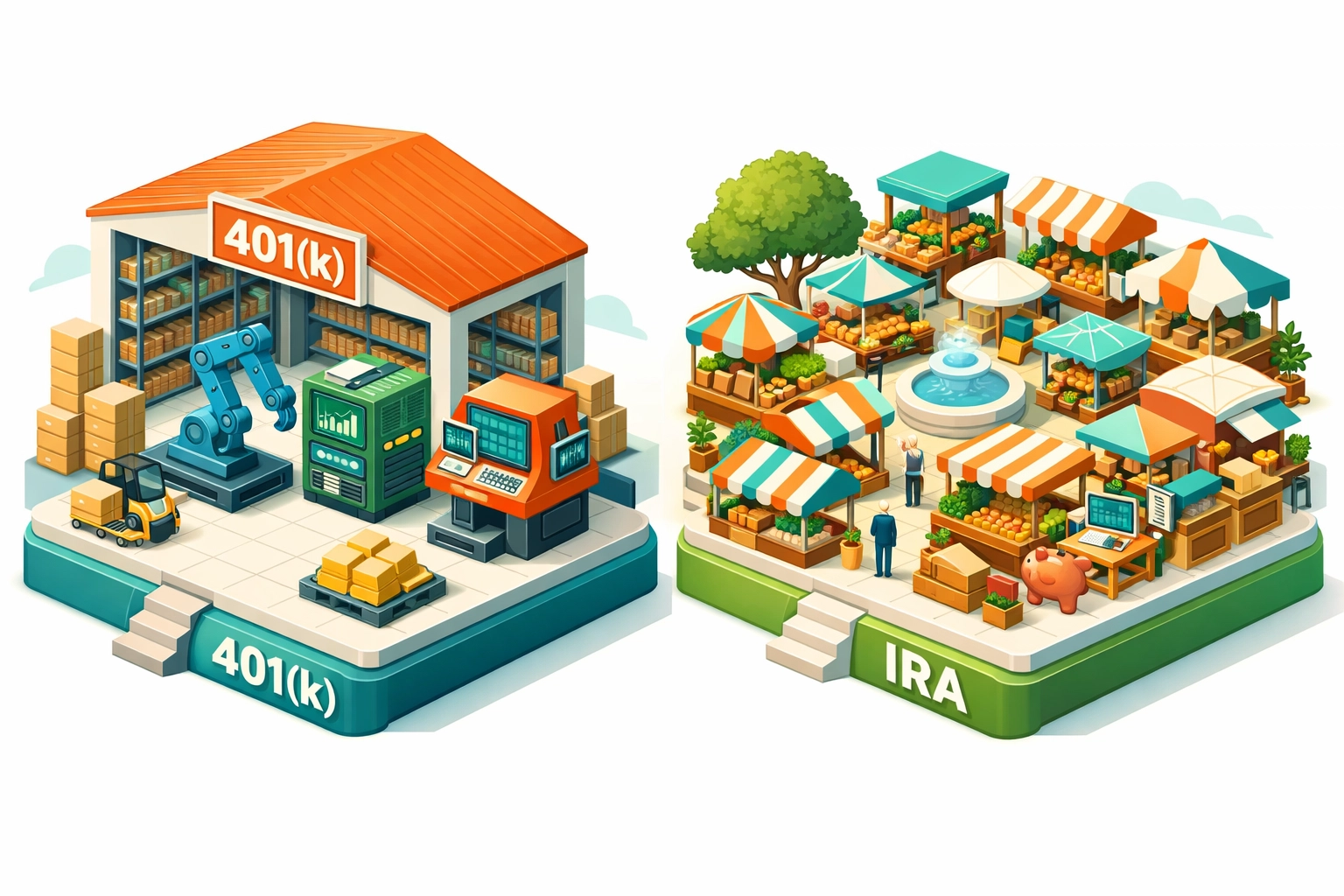
The 401(k) is like the "all-inclusive resort" of retirement accounts. It’s offered through your employer, and they handle most of the heavy lifting. You decide how much of your paycheck you want to contribute, and the company automatically deducts it before you even see the money.
Why People Love the 401(k)
The biggest draw of a 401(k) is the Employer Match. If your boss says, "We’ll match your contributions up to 5%," they are literally handing you free money. If you don't take it, you're essentially turning down a raise.
In 2026, the contribution limits are higher than ever. If you’re under 50, you can stash away up to $24,500 per year. If you’re 50 or older, you get a "catch-up" contribution of an extra $8,000, bringing your total to a whopping $32,500.

The Downsides
The main catch? You're stuck with the menu your employer gives you. You usually have a limited selection of mutual funds or target-date funds to choose from. While these are usually fine for beginners, they might not offer the specific stocks or niche sectors you’d find if you were starting a dividend investing portfolio.
The IRA: The Independent Choice
IRA stands for Individual Retirement Account. As the name suggests, this is all on you. You don’t need an employer to open one. You can go to almost any brokerage (like Vanguard, Fidelity, or even some of the best passive income apps) and open one in about ten minutes.
Why People Love the IRA
Total freedom. Want to invest in specific tech stocks? You can. Want to buy a REIT (Real Estate Investment Trust) because you're interested in earning rental income the easy way? You can do that too.
The Downsides
The limits are much tighter. For 2026, the limit for an IRA is $7,500 (plus an $1,100 catch-up if you’re 50+). It’s a great tool, but it’s harder to build a massive nest egg using only an IRA because you can't put as much money in each year.
401(k) vs. IRA: The Head-to-Head Comparison
To help you visualize the differences, let's look at the key factors side-by-side for the 2026 tax year.
| Feature | 401(k) | IRA |
|---|---|---|
| Who offers it? | Your Employer | You (through a brokerage) |
| 2026 Contribution Limit | $24,500 | $7,500 |
| Employer Match? | Yes (usually) | No |
| Investment Choices | Limited (Plan-dependent) | Unlimited (Stocks, Bonds, ETFs) |
| Income Limits? | No | Yes (for Roth IRAs) |
| Creditor Protection | High (Federal protection) | Limited (up to ~$1.7M) |
Traditional vs. Roth: The Tax Question
Both 401(k)s and IRAs come in two "flavors": Traditional and Roth. This is where people usually get confused, but it’s actually pretty simple once you look at when you pay the government.
Traditional (Tax Me Later)
With a Traditional account, you put money in pre-tax. This lowers your taxable income today.
- Example: If you earn $60,000 and put $5,000 into a Traditional 401(k), the IRS only taxes you as if you made $55,000.
- The Catch: When you retire and take the money out, you pay income tax on it then.
Roth (Tax Me Now)
With a Roth account, you put money in after-tax. You pay your taxes today, but the money grows completely tax-free.
- Example: You pay your taxes on your $60,000 salary, then put $5,000 into a Roth IRA.
- The Win: When you retire at 65 and that $5,000 has grown into $50,000, you can withdraw the whole thing without giving Uncle Sam a single penny.
For most beginners, the Roth is a fantastic choice because it protects you from higher tax rates in the future. Plus, it's a great way to store the profits you might be making from selling digital products.
The Strategy: Which One Should You Pick First?
You don’t actually have to choose just one. In fact, most financial pros suggest a specific "order of operations" to maximize your wealth. Think of it like a game of strategy.
Step 1: The 401(k) Match (The "Must-Do")
If your employer offers a match, contribute exactly enough to get the full match. If they match 4%, you put in 4%. This is a 100% return on your money instantly. You won't find that anywhere else.
Step 2: The Roth IRA
Once you’ve got your "free money" from your boss, pivot to a Roth IRA. Because IRAs have better investment options and lower fees, you can use this account to buy those high-growth ETFs or dividend stocks.
Step 3: Back to the 401(k)
If you still have money left over to save after maxing out your $7,500 IRA limit, go back to your 401(k) and keep filling it up until you hit that $24,500 cap.

Important Details to Remember for 2026
1. Required Minimum Distributions (RMDs)
The government eventually wants its tax money. For 401(k)s and Traditional IRAs, you generally have to start taking money out (and paying taxes) by age 73. However, a huge perk of the Roth IRA is that there are no RMDs during your lifetime. You can let that money sit and grow forever if you want!
2. Creditor Protection
If you’re a business owner or in a high-risk profession, this matters. 401(k)s are protected by federal law (ERISA), meaning if you ever face a lawsuit or bankruptcy, that money is generally safe from creditors. IRAs have protection too, but it’s capped (currently around $1.71 million).
3. Income Limits for Roth IRAs
Keep in mind that if you make "too much" money, the IRS might stop you from contributing directly to a Roth IRA. For 2026, these limits usually hover around $150k–$160k for individuals. If you're above that, you might need to look into a "Backdoor Roth," but that's a topic for another day!
Making the Move
At the end of the day, the "best" account is the one you actually put money into. Whether it’s $50 a month or $2,000, the magic of compound interest only works if you start.
If you’re feeling overwhelmed, start with your employer’s 401(k) just to get the match. It’s the easiest way to automate your savings. Once you see that balance growing, you’ll get the itch to open an IRA and take more control of your financial future.
Retirement isn't about being old; it's about being free. And choosing the right account today is the first step toward that freedom. What are you waiting for? Let's gooo!
About the Author